


A New Era for Solid-State Batteries: New Challenges for PMIC Design
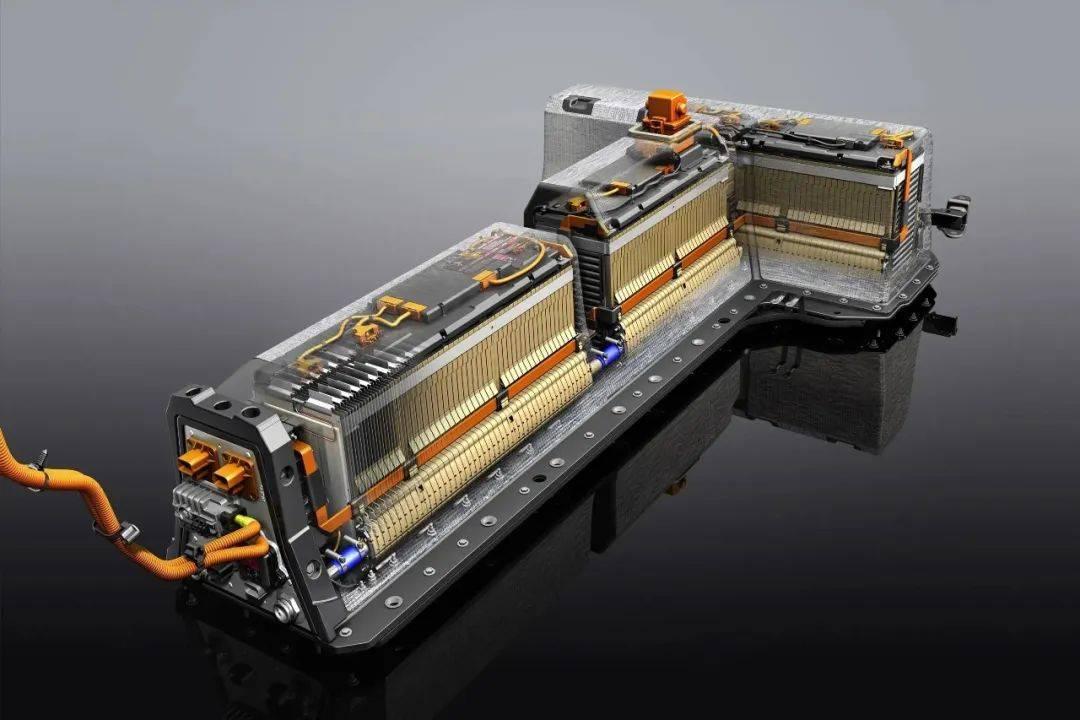
With the rapid development of new energy vehicles and energy storage products, solid-state battery technology has entered a period of accelerated industrial layout. Major global battery manufacturers are expected to achieve mass production of all-solid-state batteries around 2027, with pilot production lines expected to be completed and operational between 2024 and 2026. Against this backdrop, power management integrated circuits (PMICs) for solid-state batteries are also facing technological innovation.
Design Requirements for Solid-State Battery PMICs
The PMIC for solid-state batteries needs to meet a series of specific requirements to ensure the battery's efficient and safe operation. Firstly, solid-state batteries have a wider output voltage range, so the PMIC needs to precisely adjust and stabilize the output voltage at different charging and discharging stages to meet the needs of various loads in the battery system. When charging the battery, the PMIC needs to convert the input voltage into a charging voltage suitable for the battery and maintain voltage stability to prevent overcharging that could damage the battery. During battery discharge, the PMIC needs to convert the battery voltage into a stable voltage required by the load.
In addition, the PMIC also needs to monitor the magnitude and trend of changes in current in real-time and precisely to detect abnormalities such as overcharging, over-discharging, and short circuits in a timely manner, and to take corresponding protective measures to extend the battery life. When the PMIC detects an excessive battery charging current, it can automatically reduce the charging power to prevent battery overheating. The PMIC should also have software protection algorithms that can predict potential overheating situations in advance through the analysis and processing of temperature data and take corresponding preventive measures.
The management of solid-state batteries needs to consider their unique electrochemical behavior, including possibly different charging curves and temperature sensitivity. For example, for common lithium-ion solid-state batteries, the typical working voltage range may be 2.7V to 4.2V. When the charging voltage exceeds 4.2V, the PMIC should automatically cut off the charging circuit. In addition, an efficient DC-DC converter is essential to ensure that the power conversion from the battery to the load is as efficient as possible and to reduce energy loss.
Optimization of PMIC Functions
For PMICs, the improvement of energy conversion efficiency in solid-state batteries means that the heat generated by the PMIC is reduced, which lowers the requirements for the cooling system. At the same time, high efficiency increases the flexibility in PMIC design, allowing for higher frequency operations to reduce the size of external components or to integrate more functions without worrying about heat accumulation problems. In terms of cost, although high-efficiency PMICs may require more complex manufacturing processes and more expensive materials, the overall cost may actually be optimized due to the reduced need for other components.
Practical Applications of PMICs in the Era of Solid-State Batteries
In practical applications, the design of PMICs needs to consider the application scenarios of solid-state batteries, such as wearable devices, new energy vehicles, and energy storage stations. These products will usually have a power source and one or more DC power rails. The PMIC needs to support this wider voltage range and be able to provide a stable output voltage to different load devices. At the same time, it is necessary to provide standard communication interfaces to facilitate data exchange with the main controller or other management units, allowing for real-time monitoring of battery status and necessary adjustments.
Conclusion
As solid-state battery technology continues to advance, the design of PMICs will also continue to evolve to meet higher performance and safer standards. This includes high-efficiency power conversion, precise current control, intelligent battery management, and other functions adapted to specific needs. In the future, with the official launch of solid-state batteries, the design of PMICs will also be adjusted accordingly to unleash their best performance.
Electronic components distributor, Find in Conevo Distributor
● The TLC2274AIDR is a quad operational amplifier featuring advanced LinCMOS technology, designed for high-speed applications while maintaining low power consumption. It offers a high gain-bandwidth product of 2 MHz and a fast slew rate of 3.6 V/µs, making it suitable for a wide range of analog signal processing tasks.
● The ADP7118AUJZ-5.0 is a CMOS Low voltage difference (LDO) linear regulator manufactured by Analog Devices Inc. (ADI). Designed to tune high performance analog and mixed signal circuits, operating voltages can be reduced from 19V to 1.2V.
● The LTM4622IY#PBF is a dual-channel, ultra-thin step-down DC/DC μModule regulator manufactured by Analog Devices Inc. (ADI). It is widely used in various occasions requiring efficient and stable power conversion.
Website: www.conevoelec.com
Email: info@conevoelec.com


