


Intel's 2025 Foundry Transformation: Opportunities and Challenges Coexist
Intel is at a critical turning point. According to its Q1 2025 financial report, although its revenue remained flat compared to the same period last year, its profit plummeted, reflecting the severe challenges Intel faces in market competition and technological transformation. However, Intel is attempting to reestablish its leadership in the semiconductor foundry field through large-scale restructuring and strategic transformation.
Latest Financial Performance and Cost Optimization
 Intel's Q1 2025 financial report showed that its revenue was $12.7 billion, flat compared to the same period last year but $500 million higher than the mid-point of the performance guidance announced in January. Despite this, Intel's profitability was still lower than last year, with non-GAAP earnings per share down 28% year-over-year. Both Intel's server business and Client Computing Group (CCG) revenues declined, reflecting weakening market demand for its products. Moreover, Intel remains uncertain about its Q2 2025 performance outlook, expecting revenue between $11.2 billion and $12.4 billion, with non-GAAP earnings per share at $0.
To address financial pressure, Intel has launched a large-scale restructuring plan, with an expected layoff ratio exceeding 20%, affecting more than 21,000 employees. This layoff plan aims to streamline management levels, especially in the engineering department, to improve operational efficiency and reduce costs. Intel's goal is to cut costs by $10 billion in 2025. Although this measure may impact employee morale and innovation capabilities, Intel believes it is a necessary step to address high costs and slow decision-making.
IDM 2.0 Strategic Transformation and Foundry Business
The core of Intel's long-term strategy is the "IDM 2.0" plan, marking its fundamental shift from a traditional integrated device manufacturer to a global semiconductor foundry giant. This strategy not only includes in-house chip design, manufacturing, and sales but also offers foundry services to external customers, including potential competitors. Intel is gradually separating its chip design and manufacturing businesses, with its Foundry Services division (IFS) developing into a highly independent operating entity and planning for an initial public offering in the future. Intel positions its foundry business as the "world's first system-level foundry in the AI era," focusing on advanced processes and the high-growth AI market.
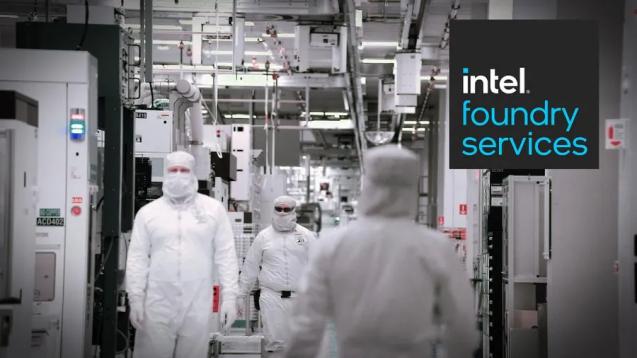 Intel's foundry services are gradually gaining the favor of heavyweight customers. Intel has reached a multi-year, multi-billion dollar framework agreement with Amazon Web Services, with foundry services producing AI architecture chips based on the Intel 18A process and manufacturing customized Xeon 6 processors through the Intel 3 process. Microsoft has confirmed that it will adopt Intel's 18A process in future chip designs, with the total value of the foundry cooperation reaching $15 billion. In addition, Intel is actively seeking to win over tech giants such as NVIDIA and Google as its foundry customers, with NVIDIA, Broadcom, and AMD having initiated evaluation procedures or completed initial test validations of Intel's 18A process technology.
Despite some progress in the foundry field, Intel still faces strong competition from TSMC. The hidden concerns of the foundry business are as follows:
● TSMC's technological lead (A14 node already released) and high customer stickiness, with its CoWoS advanced packaging technology monopolizing the AI chip market;
● Intel's Ohio factory is delayed until 2030 for production, and the ramp-up of production capacity may miss the window period.
Global Manufacturing Landscape and Technological Breakthroughs
Intel has a vast global manufacturing network, including production bases in Arizona, New Mexico, and Oregon in the United States, as well as core manufacturing hubs in Ireland and Israel. Intel is advancing global multi-regional capacity expansion, including investing over $32 billion to build two state-of-the-art wafer fabs in Arizona, spending more than $4 billion to upgrade advanced packaging lines in New Mexico, and constructing a 300-millimeter logic/foundry wafer manufacturing base in Oregon. However, the $28 billion dual-fab project in Ohio has encountered significant schedule delays, with the expected production start pushed back to 2030-2032.
In terms of technology, Intel's "five nodes in four years" (5N4Y) strategy is approaching its final stage. Its "Intel 3" process, which uses EUV lithography technology, has been mass-produced in Oregon and has entered the customer validation phase. Intel's 18A process node, a key link for the company's future development, is scheduled to be ready for mass production by the end of 2024. This node integrates innovative technologies such as RibbonFET transistors and PowerVia backside power supply, and is expected to surpass TSMC's current technological solutions in terms of performance and energy efficiency. Intel is also developing the third-generation advanced process node for external customers, Intel 14A, which will use high-numerical-aperture extreme ultraviolet lithography technology and is scheduled to start risk production at the end of 2026.
New Leadership's Vision
Intel's new CEO, Lip-Bu Tan, took office in March 2025. His primary task is to revitalize Intel's manufacturing and strengthen its layout in the AI field. Lip-Bu Tan will focus on advancing operational reforms and actively expanding foundry customer resources. Despite financial pressure and market challenges in Q1 2025, Intel is striving to transform into a top-tier foundry company through massive investment in advanced processes and technologies.
In the coming quarters, whether Intel can successfully transform and regain its leadership in the semiconductor market will depend on its performance in technological innovation, market expansion, and cost control.
Conevo: Your Premier IC Semiconductor Distributor
Conevo is a trusted distributor specializing in high-quality IC semiconductor components. We offer a wide range of integrated circuits at competitive prices. For comprehensive IC component solutions today.
1. The Infineon BTS724GXUMA1 is a 4-channel high-side power switch with integrated vertical power FET, designed for applications requiring robust power distribution and control. It features a very low on-state resistance (90 mΩ), a wide operating voltage range (5.5V to 40V), and comprehensive protection functions including short-circuit, overload, and thermal shutdown.
2. The Macronix MX25L25635FMI-10G is a 32MB (256M-bit) serial flash memory chip with a 3.3V operating voltage, featuring high-speed SPI communication, low power consumption, and a wide temperature range (-40°C to +85°C), making it suitable for embedded systems and IoT applications requiring reliable non-volatile storage.
3. The STM32F405RGT6 is a high-performance ARM Cortex-M4 microcontroller featuring 1MB of Flash memory, 192KB of SRAM, and a wide range of peripherals including ADCs, DACs, and communication interfaces.
Website: www.conevoelec.com
Email: info@conevoelec.com


