


US Government's Bold Move: Eyeing Equity in Micron, Samsung, and TSMC
The US government has been committed to promoting the domestic development of the semiconductor industry in recent years to enhance its competitiveness in the technology sector and stabilize its supply chain. The Chips and Science Act, a significant policy tool introduced by the US government to achieve this goal, plans to invest $52.7 billion to support domestic chip manufacturing and research and development in the United States. However, recent shifts in the US government's policy direction have attracted widespread attention.
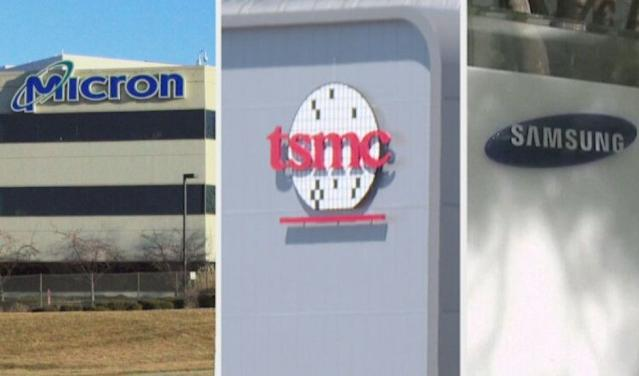 According to reports from Reuters and other major media outlets, US Secretary of Commerce Howard Lutnick is exploring the possibility of exchanging equity stakes in chip manufacturers for funding from the Chips Act. This plan involves global leading chipmakers such as Micron, TSMC, and Samsung, as well as Intel. As most of the subsidy funds have not yet been distributed, this provides the US government with the opportunity to reset the conditions.
White House Press Secretary Carolyn Levitt confirmed that Lutnick is in discussions with Intel to reach an agreement that would give the US government a 10% equity stake. Although Lutnick previously stated that the government would not interfere with Intel's operations, such an investment would be unprecedented and would mark a new era of US influence over large corporations.
Details of Subsidy Funds and Equity Exchange
At the end of last year, the US Department of Commerce finally determined the subsidies for Samsung, Micron, and TSMC, amounting to $4.75 billion, $6.2 billion, and $6.6 billion, respectively. These subsidies are intended to support these companies in producing semiconductors in the United States. However, in June of this year, Lutnick stated that the department is renegotiating the subsidies for semiconductor companies from the previous President Biden, calling them "too generous." He mentioned at the time that Micron had agreed to increase its spending on US chip factories. Sources also revealed that Secretary of the Treasury Scott Benson has been involved in the relevant discussions, but Lutnick is the key figure driving the process forward. If this "equity-for-subsidy" model is fully implemented, the US government will become a major shareholder in the world's leading chip manufacturers.
Impact and Analysis
This unprecedented "subsidy-for-equity" plan marks a significant shift in the US federal government's semiconductor industry policy. Historically, the US government has provided funding to companies through equity stakes to boost market confidence during times of economic turmoil, but such a large-scale layout in the semiconductor industry is the first of its kind. Analysts point out that if this plan is implemented, it will give the US government greater say in the operations and decision-making of chip manufacturers, which could have a profound impact on the global semiconductor industry landscape.
Moreover, this plan has also raised concerns within the industry. Some people worry that government intervention may disrupt the independent operation of companies and the market mechanism, and may also provoke dissatisfaction and countermeasures from other countries. However, from the perspective of the US government, this move is seen as an "innovative idea" to prioritize US interests from the standpoint of national security and the economy.
Conclusion
The US government's consideration of taking equity stakes in chip manufacturers such as Micron, Samsung, and TSMC through funding from the Chips Act represents a significant adjustment in its semiconductor industry policy. This plan will not only change the relationship between the US government and companies but also may have an important impact on the global semiconductor industry landscape. In the future, the implementation details and final outcomes of this plan will be closely watched by the global community.
Conevo IC Distributor
Conevo is a leading IC chip distributor, dedicated to providing high-quality semiconductor products, covering a wide range of electronic components, including power management chips (PMics), LED drivers, PHY chips, and many more chip components. Conevo is committed to providing customers with the latest and most advanced IC products to ensure that diverse customer needs are met. The following are the popular IC models selected and recommended by Conevo:
● ADP7118AUJZ-3.3-R7: A low-noise, low-dropout linear regulator with an input voltage range of 20V and an output current of 200mA, suitable for noise-sensitive applications.
● LP5521YQ/NOPB: A low-power, programmable LED driver that supports I²C interface, suitable for portable devices and low-power systems.
● KSZ8041NLI-TR: A Gigabit Ethernet PHY chip that supports 10/100/1000Mbps data transmission, featuring low power consumption and high reliability, and is suitable for network communication.
Website: www.conevoelec.com
Email: info@conevoelec.com


