


Middle East Conflict Triggers Risk of Surging Chip Material Costs
In March 2026, as the Middle East war entered its third week, the global semiconductor industry is facing a potential supply chain crisis. SEMI Taiwan issued a statement on March 18, noting that Taiwanese semiconductor companies currently face no immediate risk of disruption to basic chemicals or raw material supplies, yet the threat of soaring material costs has already materialized.
The Helium Crisis in Chip Manufacturing
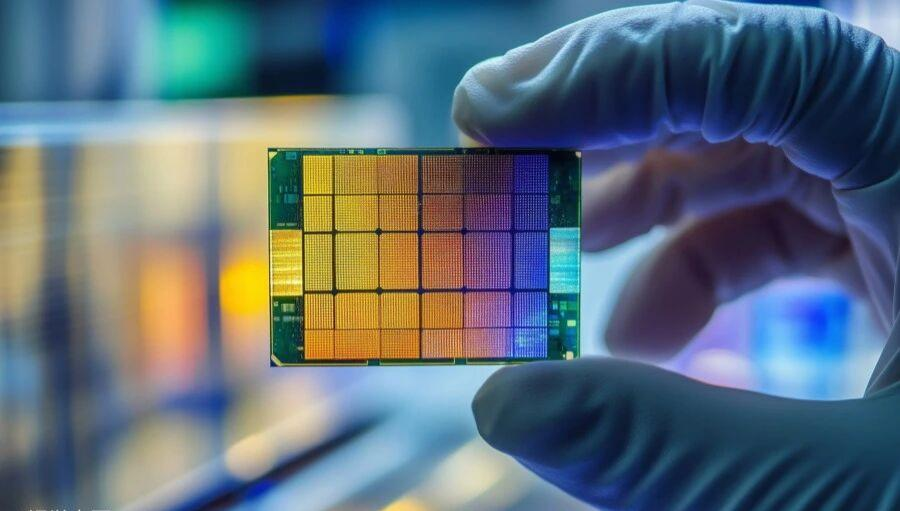 The core of this supply chain risk centers on helium—an irreplaceable critical material in semiconductor manufacturing. Qatar, as the world's second-largest liquefied natural gas (LNG) supplier, accounts for approximately 33% of global helium production, with an annual output of 63 million cubic meters. However, Iranian drone attacks in early March forced the shutdown of QatarEnergy's facilities at Ras Laffan Industrial City. With an annual LNG processing capacity of 77 million tons, this facility's closure immediately reduced global helium supply by 30%.
The strategic value of helium in chip manufacturing manifests across three critical stages. First, in lithography processes, helium is used to create a stable vacuum environment, ensuring precise alignment and exposure of photomasks. Second, as a cooling medium, helium effectively dissipates heat generated during silicon wafer processing, preventing thermal stress from negatively impacting chip performance. Third, helium's chemical inertness makes it ideal for leak detection in ultra-clean environments. More importantly, as an inert gas, helium has no effective substitute in chip production. its low thermal conductivity enables precise temperature control, while its lightweight and small atomic size characteristics meet ultra-clean environment requirements.
Phil Kornbluth of Kornbluth Helium Consulting stated that the world is facing at least two to three months of helium production disruption, with supply chain normalization potentially requiring four to six months. Qatar's energy minister also indicated that even if the conflict were to end immediately, helium delivery would still need several weeks to months to return to normal.
Industry Response and Assessment
Facing the potential crisis, major chip manufacturers have activated emergency mechanisms. SK Hynix announced it has diversified helium supply sources and ensured adequate short-term inventory. TSMC stated it currently foresees no significant operational impact but is closely monitoring developments. GlobalFoundries also confirmed it has established direct contact with regional suppliers, customers, and partners, and has formulated mitigation plans.
SEMI Taiwan's assessment suggests that if the Iran war can be resolved within four to six weeks, no disruption to critical material supplies is expected, as most chip companies have expanded safety stock and developed supply chain resilience strategies following the COVID-19 pandemic. This judgment is based on the industry's profound recognition of supply chain vulnerabilities in recent years—the helium and neon shortages triggered by the 2022 Russia-Ukraine conflict served as a wake-up call, prompting companies to reconstruct inventory management systems.
However, if the conflict persists for months, helium supply shortages may force chip manufacturers to prioritize production of high-margin AI chips while scaling back capacity for low-margin components, thereby exacerbating structural imbalances in the global chip market.
CONEVO Semiconductor Distribution Services
In the context of an increasingly complex semiconductor supply chain, CONEVO, as a professional electronic component distributor, is dedicated to providing efficient and reliable chip procurement and supply chain solutions for global customers. CONEVO focuses on voltage converters, storage components, power chips, IMU, and other popular chip components, and provides stable material supply to help customers improve procurement efficiency and optimize BOM costs.
● TPS62130RGTR: 3A synchronous buck DC-DC converter, using DCS-Control™ topology architecture, supporting a wide input voltage range of 3V to 17V and an adjustable output of 0.9V to 6V.
● SCB13H4G160AF-11M: UnilC 4Gbit DDR3L SDRAM storage chip, using an x16-bit wide architecture and 96-ball TFBGA packaging, supporting a clock frequency of 933MHz.
● CSD95490Q5MC: NexFET™ intelligent power stage chip, integrating high-side and low-side MOSFETs and drivers, with a peak output current of up to 105A.
Website: www.conevoelec.com
Email: info@conevoelec.com


