


Three core components of power electronics: MOSFET, BJT, and IGBT
In modern power electronic systems, MOSFETs, BJTs, and IGBTs constitute the three pillars of power semiconductor devices. Their unique structures and operating principles determine their respective advantages and limitations in different application scenarios, collectively driving the advancement of energy conversion, motor drives, and power management technologies.
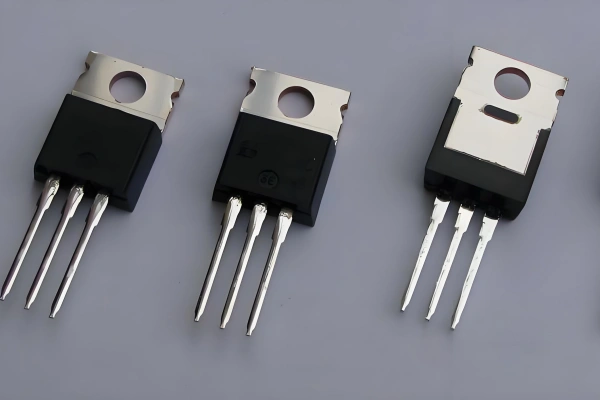
MOSFET: The Voltage-Controlled Device for High-Speed Switching
The Metal-Oxide-Semiconductor Field-Effect Transistor (MOSFET) is a voltage-controlled unipolar device. Its core structure comprises source, drain, gate, and substrate terminals, with the gate isolated from the channel by a silicon dioxide insulating layer, resulting in extremely high input impedance. This design enables the MOSFET to consume virtually no gate drive current, achieving precise control with voltage signals alone.
The MOSFET operates based on the field-effect principle: when the gate-source voltage exceeds the threshold voltage, an inversion layer forms at the semiconductor surface, creating a conductive channel. N-channel enhancement-mode MOSFETs are the most widely adopted, dominating DC-DC converters, switching power supplies, and digital integrated circuits due to their minimal switching losses. However, the significant increase in on-resistance with rising voltage limits their application in high-voltage, high-current scenarios—high-voltage MOSFETs are typically restricted to below 600V, while super-junction MOSFETs can extend this range to 900V.
BJT: The Classic and Reliable Current Amplification Device
The Bipolar Junction Transistor (BJT), as the earliest semiconductor amplification device, employs current control mechanisms. Its structure consists of three semiconductor layers forming two PN junctions, classified into NPN and PNP types. The three terminals are the emitter, base, and collector, with the base region being extremely thin and lightly doped—critical for achieving current amplification.
The BJT operates based on minority carrier injection: when the emitter junction is forward-biased, the emitter injects carriers into the base. these carriers diffuse through the base and are mostly collected by the reverse-biased collector junction, forming the collector current. The typical current gain coefficient β is approximately 100. Its low saturation voltage and excellent linear characteristics maintain its value in audio amplifiers, analog circuits, and low-to-medium frequency switching applications. However, the current drive requirement results in complex drive circuits, switching speeds limited to the microsecond range (typically below 100kHz), and thermal runaway risks.
IGBT: The Composite Solution for High-Voltage and High-Power Applications
The Insulated Gate Bipolar Transistor (IGBT) represents an intelligent fusion of MOSFET and BJT technologies, combining the advantages of both. Its structure features MOSFET gate control at the front end and a BJT output stage at the rear, forming a four-layer PNPN structure. This design achieves the perfect combination of high input impedance from voltage-controlled devices and low on-state voltage drop from bipolar devices. During conduction, gate voltage forms a channel in the MOSFET section, providing base current for the PNP transistor and triggering conductivity modulation that significantly reduces drift region resistance. During turn-off, the channel disappears and carrier recombination causes the device to cut off.
The IGBT's core advantage lies in its exceptional performance in high-voltage, high-current scenarios. Its breakdown voltage ranges from 600V to 6500V, with current carrying capabilities reaching thousands of amperes. The on-state voltage drop is merely 2-3V (for 1000V devices), significantly superior to MOSFETs of comparable voltage ratings. Although its switching speed (microsecond range) falls between that of MOSFETs and BJTs, it holds an irreplaceable position in low-to-medium frequency, high-power applications such as industrial inverters, new energy vehicle electric drive systems, and photovoltaic inverters.
Technical Comparison and Application Selection Guide
Characteristic | MOSFET | BJT | IGBT |
Control Mechanism | Voltage control, extremely high input impedance | Current control, requires continuous base current | Voltage control, high input impedance |
Frequency Characteristics | Ultra-high frequency (>100kHz to MHz range) | Low frequency (<100kHz) | Medium frequency (1-40kHz) |
Voltage/Current Range | Dominant in low-voltage applications (<600V) | Voltage tolerance above 1000V | High-voltage, high-current (600V-6500V, thousands of amperes) |
Core Losses | Extremely low switching losses. conduction losses increase with voltage | Low saturation voltage, small conduction losses, high switching losses | Low on-state voltage drop under high voltage, optimal comprehensive losses |
Typical Applications | Consumer electronics, DC-DC converters, high-frequency power supplies | Audio amplification, linear regulation, low-to-medium frequency switching | Industrial drives, new energy inverters, electric vehicles |
•IRF540N: General-purpose medium-power N-channel MOSFET | •2N2222A: General-purpose small-signal NPN switch and amplifier | •FGA25N120ANTD: 1200V/25A discrete IGBT for inverters, UPS |
Selection should follow these principles: MOSFETs are the first choice for low-voltage, high-frequency scenarios. for medium-voltage, medium-frequency applications, selection depends on cost and drive complexity trade-offs. while IGBTs are mandatory for high-voltage, high-power applications.
Conclusion
MOSFETs, BJTs, and IGBTs represent three developmental stages of power semiconductor technology—from current control to voltage control, from single-function to composite optimization. MOSFETs dominate consumer electronics and communication power supplies with their high-speed switching characteristics. BJTs maintain their position in specific analog circuits through classic reliability. and IGBTs have become the core of high-voltage, high-power fields such as industrial control, new energy, and rail transportation.
Understanding the essential differences and applicable boundaries of these three devices is fundamental to optimizing power electronic system designs and a key driver for advancing efficient energy conversion and intelligent control.
Website: www.conevoelec.com
Email: info@conevoelec.com


