


Google Tensor G7 Chip: Continues with 2nm Process
According to the latest information, Google is actively advancing the development of its self-developed mobile chip series, Tensor, and is currently working on the next-generation Tensor G7 chip. This chip, with the internal codename "LaJolla", is expected to be featured in the Pixel 12 series set for release in 2027.
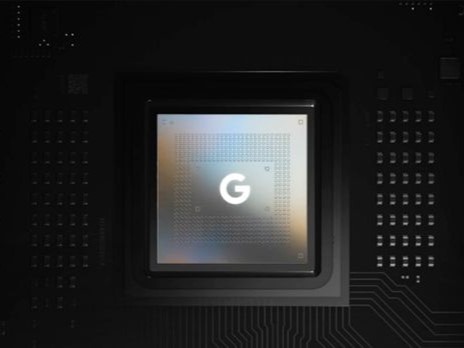 In terms of manufacturing process, the Tensor G7 continues the path of its predecessor, with rumors suggesting it will again utilize TSMC as its foundry partner. Like the Tensor G6, the G7 will be based on a 2nm process node, though it might adopt a refined version of the 2nm process. Specific technical details about the Tensor G7 remain limited at this time. However, it is confirmed that Google will not use flagship chips from third parties, insisting on its in-house development route. This strategy appears relatively unique within the Android ecosystem, as most smartphone manufacturers still rely on chip suppliers like Qualcomm or MediaTek.
AI-First Design Philosophy
Google's self-developed chip strategy differs from the traditional performance-oriented approach. The Tensor series does not chase extreme benchmark scores but instead focuses more on AI capabilities and user experience needs. The Tensor G7 will continue to deepen its efforts in this direction, with further optimizations for AI workloads to enhance the user experience.
This design philosophy reflects Google's vision for the future of mobile computing. As AI applications become more prevalent on smartphones, the NPU optimized specifically for AI tasks is becoming increasingly important. The Tensor G7 is expected to further enhance on-device AI capabilities, providing users with smarter and more personalized services.
Evaluation and Market Positioning
However, there are differing external opinions on Google's strategy. Some views suggest that Google's heavy bet on the NPU at the expense of raw CPU/GPU performance is not advisable and may primarily serve to better control chip manufacturing costs. Compared to competitors pursuing ultimate performance, the Tensor series chips may not hold an advantage in traditional computational performance.
From a market positioning perspective, the Tensor G7 is unlikely to be a top-tier performance SoC of its time. Google seems more inclined to find a balance between performance, power consumption, and expense, focusing on delivering a unique AI experience for Pixel phones rather than competing for the top spot on performance rankings.
IC Component Sourcing Considerations
In the current landscape of persistent electronic component shortages, particularly for key categories like MCUs, MOSFETs, and Flash memory, the role of specialized distributors like CONEVO Electronics becomes critical. During chip shortages, CONEVO excel at rapidly providing alternative component solutions and engineering support, helping manufacturers navigate supply chain disruptions. Here are some featured IC modes.
● 10CL016YU484C8G: An Intel/Altera Cyclone® 10 LP family FPGA featuring 15,408 logic elements, 340 I/O, and 516 Kbits of embedded memory
● MD8031AH/B: A versatile 8-bit microcontroller based on the classic 8051 core, commonly used in industrial control, smart home applications, and sensor interface modules
● STM32L451RET6TR: A high-performance, ultra-low-power 32-bit ARM® Cortex®-M4 MCU from ST with 512 KB Flash, 160 KB SRAM, and extensive connectivity options
● INA194AIDBVR: A precision current-sense amplifier from TI with a wide -16V to +80V common-mode range and a fixed 20V/V gain
Website: www.conevoelec.com
Email: info@conevoelec.com


