


Kyocera to Invest ¥650 Billion in Component Business
As global AI expansion drives sustained growth in data center and semiconductor manufacturing demand, upstream component suppliers are capturing significant structural opportunities. Japan's Kyocera Corporation has unveiled its latest mid-to-long-term capital expenditure plan, committing a total of ¥650 billion (approximately $4 billion) to its components business over a six‑year period ending in March 2031. The funds will be concentrated on two high‑growth areas: parts for semiconductor manufacturing equipment and electronic components for AI‑powered data centers.
Investing in Ceramic Chips and AI Data Center Components
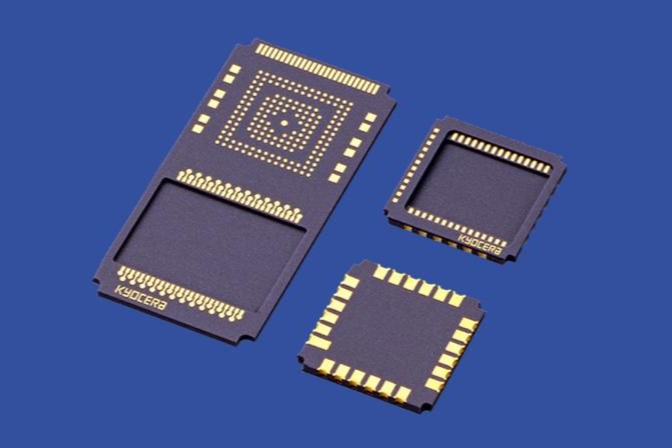 Kyocera holds roughly half of the global market for ceramic chip‑manufacturing components. Its core offerings include electrostatic chucks for wafer handling, vacuum chucks, and wafer stage assemblies for lithography equipment – precision parts that are essential consumables for both advanced and mature process nodes. As wafer fabs worldwide continue to expand capacity and chip‑making processes grow more complex, orders for upstream ceramic components have risen in tandem. The first pillar of this investment is dedicated to expanding production capacity for these products – through new manufacturing lines and additional equipment – while also accelerating R&D and qualification of next‑generation, high‑temperature‑resistant, high‑precision ceramic substrate materials.
A second allocation targets components for AI data center infrastructure, covering ceramic packages for optical communication, multilayer aluminum nitride high‑speed substrates, AI‑server‑specific MLCCs, and low‑phase‑noise crystal oscillators. Notably, Kyocera commands approximately 90% of the global market share for ceramic packages used in optical network components, with products compatible with 400G, 800G, and next‑generation high‑speed optical transceivers. The company has set aside a dedicated ¥100 billion budget to expand its MLCC production line at the Kagoshima plant, aimed at meeting the enormous demand – tens of thousands of capacitors per server – required by AI servers.
Strategic Reorganization and Competitive Landscape
In January of this year, Kyocera transferred certain chip‑related products from its automotive components division to its ceramic components business unit. Management stated that the previously vertical organizational structure, which was segmented by application, has been reoriented toward a horizontal integration centered on ceramic core technologies – a move designed to fully leverage the company's technical strengths. Following the divestiture of its consumer mobile phone business, components have become Kyocera's primary revenue pillar, with strategic focus now squarely on the high‑growth sectors of semiconductors, computing power, and automotive electronics.
Nevertheless, competition is intensifying. NGK Insulators has announced plans to invest ¥250 billion by fiscal 2030 in developing core parts for semiconductor equipment. TOTO, which ranks second in electrostatic chuck shipments, is actively expanding its production capacity. Analysts point out that Kyocera's previous lack of focused business priorities has resulted in slower market‑capitalization growth compared to peers such as Murata Manufacturing and TDK.
IC Component Sourcing - CONEVO Distributor
For engineers and procurement professionals seeking reliable component sourcing, CONEVO stands as a premier independent distributor of electronic components. Specializing in FPGA, MCU, DSP, data converters, power management ICs, and memory, CONEVO leverages a global procurement network and a professional sales team to deliver a one-stop supply chain solution — from chip selection and BOM optimization to rapid logistics. Daily Hot Stock Items:
● AD7710SQ: A 24-bit precision sigma-delta ADC from ADI, featuring a 131 dB signal-to-noise ratio and dual differential inputs.
● 5CEFA9F27I7N: An Intel (Altera) Cyclone V E FPGA with 301,000 logic elements, 336 I/Os, and 14.25 Mb of embedded RAM.
● MX29LV160DBTI-70G: A 16 Mb parallel NOR flash memory from Macronix, organized as 2M × 8 or 1M × 16 bits, with a 70 ns access time and 2.7V–3.6V operation.
● REF200AUE4: A precision dual current source and current mirror from TI, delivering 100 µA output with ±0.25% accuracy across a 2.5V to 40V input range.
Website: www.conevoelec.com
Email: info@conevoelec.com


