


Samsung's Foundry Business Achieves First Monthly Profit in Three Years
In June 2026, Samsung Electronics' foundry division recorded a monthly break-even point, marking its first monthly profit since 2023.
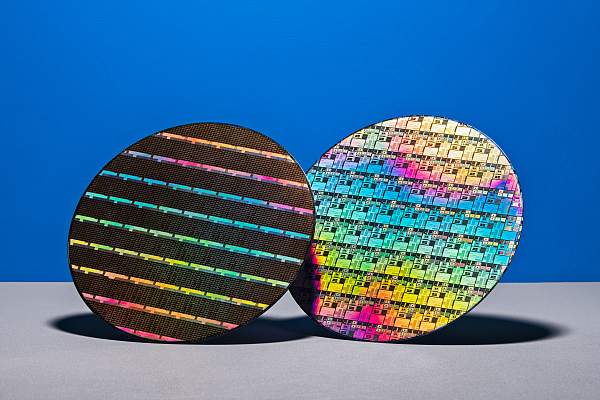
HBM Demand and 4nm Yield Improvement
The core drivers behind this turnaround are two structural improvements. The first is the continued expansion of shipments of HBM (High Bandwidth Memory) base dies. These base dies are logic chips located at the bottom of DRAM stacks and are manufactured on Samsung's own foundry lines. With Samsung commencing mass production and commercial shipment of HBM4 in February this year, and providing 12‑layer HBM4E samples to global customers in May, wafer input volumes on the 4nm line have increased significantly in tandem.
The second factor is a notable improvement in the yield of the 4nm process. Industry estimates suggest that Samsung's 4nm yield has risen to approximately 80%. Higher yields mean that more qualified chips can be produced from the same wafer input, while scrap and rework costs are substantially reduced. The combination of increased HBM base die orders and advanced‑node yield improvement has lowered the fixed cost burden.
It is worth noting that the division remained in the red in April and May, so whether it can achieve a full‑quarter profit in the second quarter is still uncertain. However, given that June's profit stemmed from sustained contributions of higher capacity utilisation and process yield gains, Samsung internally believes that the likelihood of a quarterly profit in the third quarter has increased considerably.
Key Customers for 2nm Process
Alongside the profit improvement, Samsung has made breakthroughs in customer acquisition for its advanced 2nm process. Tesla's next‑generation AI5 chip has completed tape‑out and will be manufactured using Samsung's 2nm process at the Taylor plant in Texas. The AI5 is the first product in Tesla's chip roadmap to adopt the cutting‑edge 2nm node and features the world's highest‑level autonomous driving technology. The Taylor plant is scheduled to start trial production by the end of this year and begin mass production in 2027. This also marks the first time Samsung's 2nm process has been applied to a large‑scale commercial order.
At the same time, AI startup giant Anthropic's next‑generation AI accelerator chip has also been confirmed to use Samsung's 2nm process line. Samsung previously participated as a strategic investor in Anthropic's US$65 billion Series H funding round completed in May this year. It has been revealed that Samsung's foundry division has finalised the chip production agreement for Anthropic.
In addition, major fabless company AMD is actively evaluating Samsung's advanced processes to diversify its next‑generation GPU and accelerator production, reducing its over‑reliance on TSMC. The yield of Samsung's 2nm GAA process has reportedly climbed from around 20% in the second half of 2025 to over 60%.
Conclusion
Despite clear signs of recovery, the gap between Samsung's foundry business and TSMC remains significant. According to TrendForce statistics, in the first quarter of 2026, TSMC held a dominant 72.3% market share in the global foundry market, while Samsung ranked second with 6.5%, a decline from 7.7% in the same period last year.
CONEVO Chip Supply Distributor
CONEVO Elec is a professional independent distributor of electronic components, specializing in popular products such as FPGAs, MCUs, DSPs, power management ICs, and data converters. Leveraging a global procurement network and a professional sales team, CONEVO provides customers with a one-stop supply chain solution from chip selection, BOM optimization to quick quotations, helping to facilitate the efficient progress of customers' electronic manufacturing projects. The selected recommended chip components for today are as follows:
● TPA2028D1YZFR: 3W single-channel D-class audio power amplifier, supporting I²C volume control and SmartGain™ AGC/DRC technologies.
● XC7S50-2FGGA484C: Spartan-7 series FPGA, with 52,160 logic units, 250 user I/Os, and built-in 2.7Mbit block RAM.
● NM232DDC: Dual-channel RS232 isolated receiver-transmitter, 24-DIP packaging, data rate 9.6kbps, supply voltage 4.5V–5.5V.
Website: www.conevoelec.com
Email: info@conevoelec.com


