


Voltage Supervisor IC Selection: From Key Parameters to Selected Models
When MCUs, DSPs, and FPGAs operate below their specified minimum operating voltage, internal logic may enter race conditions, causing data corruption in Flash/EEPROM during write operations and even unpredictable program-counter jumps. More importantly, when the supply voltage deteriorates, internal chip logic may fail before the software exception-handling routine can execute.
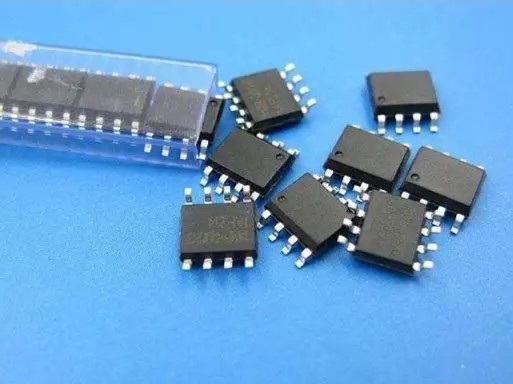 Voltage supervisors are hardware protection devices designed to address these issues. Voltage Supervisor/Reset Supervisor ICs continuously monitor power rails and output a RESET or fault signal when the voltage is abnormal, allowing the system to reset according to a predefined logic or enter a safe state. They are fundamentally different from watchdog timers: a watchdog monitors software behavior after the processor executes code, while a voltage supervisor monitors the physical validity of the power rail continuously before and during code execution, keeping the processor in reset until the voltage stabilizes within the safe range.
Key Selection Parameters
1. Reset Threshold
The supervisor's maximum trigger threshold must be strictly below the worst-case minimum output voltage of the power supply to prevent false resets during normal operation. At the same time, its minimum trigger threshold must be strictly above the processor's minimum operating voltage, ensuring that the system enters reset before logic levels become indeterminate.
2. Hysteresis Voltage
Hysteresis creates a voltage gap between reset assertion and release, preventing repeated switching of the reset signal when the supply voltage fluctuates around the threshold. Common options include 1%, 5%, and 10% hysteresis ratios. When the processor exits reset, a sudden drop in load current may cause the supply voltage to rebound. Sufficient hysteresis ensures that reset is released only after the voltage has genuinely recovered.
3. Reset Delay
Reset delay refers to the time the supervisor continues to hold the reset state after the voltage returns to normal, allowing time for the power rail to stabilize and the oscillator to start. This delay can be programmed with an external capacitor; for example, 10 nF corresponds to approximately 12.8 ms, while 10 μF corresponds to approximately 12.8 s.
4. Output Type
Push-pull outputs provide strong drive capability but cannot be shared with other reset signal lines. Open-drain outputs require an external pull-up resistor but support multiple devices sharing a reset bus. The appropriate type should be selected according to the system architecture.
Selected Voltage Supervisor Components
Model/Series | Mfr | Package | Monitoring Voltage Range | Quiescent Current | Key Features | Typical Applications |
MAX809/810 | onsemi/ADI | SOT-23-3 / SC-70-3 | 1.2V ~ 4.9V | 0.5 µA | Reset asserted within 10 µs; no external components required | Entry-level system monitoring, battery-powered devices |
TPS3808 | TI | SOT-23-6 / WSON-6 | 0.4V ~ 5.0V | 2.4 µA | Programmable delay from 1.25 ms to 10 s, manual reset, fixed/adjustable thresholds | Portable/battery-powered devices, FPGA/ASIC monitoring |
Microchip | SOT-23-5 | 1.5V ~ 5.5V | 3.5 µA | Integrated undervoltage detection, delay generator, and manual reset | Compact system monitoring, applications requiring dual high/low outputs | |
SGM861 | SGMICRO | TDFN-1.5×1.5-6L | 1.7V ~ 5.5V | 1.24 µA | Dual OV/UV threshold monitoring, built-in hysteresis and deglitching, adjustable reset delay | Low-voltage applications, industrial automation, process control |
ADI | TDFN-8 | Nominally 0.6V ~ 0.9V | — | Window monitoring, UV/OV thresholds ±2%~±5% factory-programmable; AEC-Q100 qualified | ADAS, multi-voltage ASICs, low-core-voltage systems | |
TPS37-Q1 | TI | DSK-10 / DYY-14 | 2.7V ~ 65V | 1 µA | Dual-channel OV/UV window monitoring, programmable detection and reset delay | Automotive 12V/24V battery systems |
TPS38800 | TI | WQFN-16 | 2.5V ~ 5.5V | 200 µA | 2~8-channel window monitoring, I²C, CRC+PEC verification | Medical robots, industrial robots, and other safety-critical applications |
During actual procurement and replacement, operating temperature, package, threshold suffix, output polarity, automotive qualification, and supply availability must also be verified. Compatibility should not be determined solely by the basic part number.
As a professional independent IC distributor, CONEVO focuses on global sourcing, shortage solutions, and inventory access. Its product portfolio covers power management ICs, interface ICs, MCUs, memory, and industrial semiconductors, serving customers including OEMs, EMS providers, and design companies. With an extensive global supplier network, CONEVO helps customers reduce procurement risks, shorten lead times, and secure fast delivery and BOM support for critical project components.
Website: www.conevoelec.com
Email: info@conevoelec.com


