


ASML Capacity Plan: Doubling EUV Lithography Output by 2027
Faced with the explosive surge in chip demand ignited by artificial intelligence (AI), global semiconductor equipment giant ASML has formally established its "capacity doubling" strategy. Chief Executive Officer Christophe Fouquet explicitly stated that the company will leverage the dual engines of capacity expansion and technological iteration to eliminate concerns that EUV lithography equipment could become a bottleneck for the industry.
As the world's sole supplier of EUV lithography systems, ASML's production capacity directly determines the supply ceiling for advanced process chips globally. Fouquet emphasized that the company does not believe its tools will become a constraint on the semiconductor industry's development, and that ASML possesses multiple means to ensure stable supply.
Capacity Growth: From 44 to 80 Units
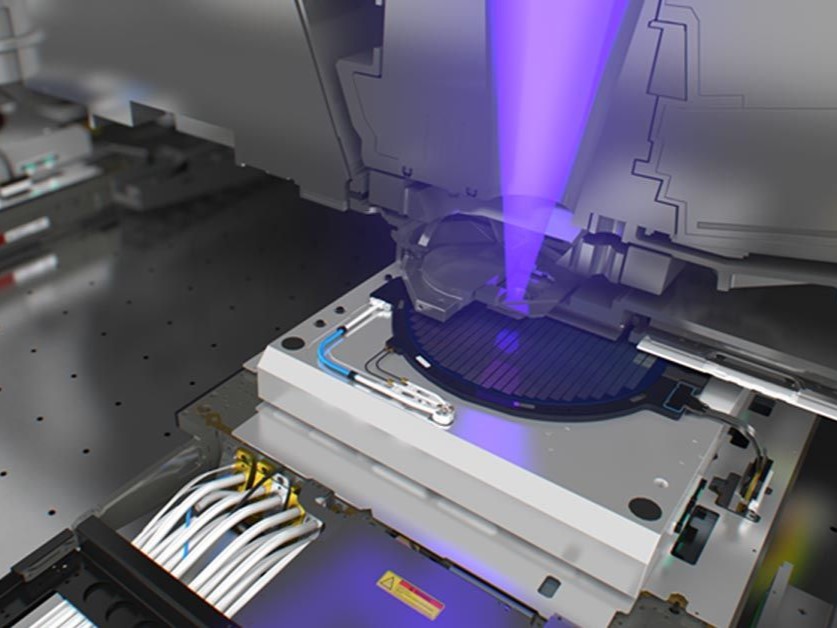 ASML has provided a clear capacity expansion roadmap: the company plans to increase shipments of Low-Numerical Aperture (Low-NA) EUV systems to at least 60 units in 2026, and further aims to raise this figure to at least 80 units by 2027. This represents a doubling compared to the 44 units shipped in 2025, directly addressing market anxieties regarding equipment shortages.
Chief Financial Officer Roger Dassen revealed that component shortages that previously troubled the industry—particularly challenges related to optical element supply from Carl Zeiss—have been effectively resolved. ASML's current production targets are now clearly defined as 90 Low-NA EUV systems and 600 Deep Ultraviolet (DUV) systems annually.
Demand Driven by Memory Manufacturers
Supporting this aggressive capacity expansion plan is massive demand from memory chip manufacturers. In the first quarter of 2026, nearly half (45%) of ASML's revenue came from the Korean market, with over half (51%) of quarterly shipments dedicated to memory manufacturing. SK Hynix plans to install 20 Low-NA EUV units over the next two years, all dedicated to HBM memory and advanced storage solutions, making it one of ASML's largest customers.
Technological Iteration
Regarding existing equipment optimization, ASML's flagship NXE:3800E model has seen improvements in manufacturing processes, shortened production cycles, and accelerated assembly and testing speeds. More critically, equipment throughput has increased from 220 wafers per hour to 230 wafers per hour. Customers can obtain additional capacity simply by upgrading the efficiency of existing production lines.
Technological breakthroughs provide foundational support for capacity release. ASML recently successfully demonstrated a 1,000-watt EUV light source, ensuring the scalability of Low-NA EUV technology for years to come, with the potential to increase equipment throughput to 330 wafers per hour by 2031.
CONEVO Chip Components Supplier
Conevo is an electronic component distributor that specializes in providing high-performance semiconductor products such as FPGAs, MCUs, DSPs, data converters, pmics, and memory. We can offer customers a one-stop procurement service including chip selection, BOM optimization, and rapid logistics. The popular IC components of CONEVO today are as follows:
● MT9M001C12STM-DR: Aptina 13-megapixel CMOS image sensor, supporting 12-bit parallel data output
● SI3127DV-T1-GE3: Vishay dual N-channel power MOSFET, featuring low on-resistance and fast switching characteristics
● SZESD7361P2T5G: onsemi low-capacitance ESD protection diode array, providing ±15kV contact discharge protection
● ISO1432BDWR: TI isolated RS-485 transceiver, integrating digital isolation technology and fault protection functions
Website: www.conevoelec.com
Email: info@conevoelec.com


