


MLCC Market: Analysis of Classic Models from Murata, TDK, and Taiyo Yuden
Multilayer Ceramic Capacitors (MLCCs) are among the most widely used passive components, extensively applied in power decoupling, signal filtering, and energy storage across various electronic devices. In 2026, the global MLCC market is undergoing a growth cycle driven jointly by AI computing infrastructure and automotive electrification. A single server equipped with high-performance AI accelerators may require tens of thousands of MLCCs, while a pure electric vehicle uses approximately 3,000 to 5,000 units, representing a significant increase compared with conventional internal-combustion-engine vehicles. Meanwhile, 5G-Advanced base station construction and industrial automation continue to push demand for high-capacitance, high-voltage, and high-reliability devices.
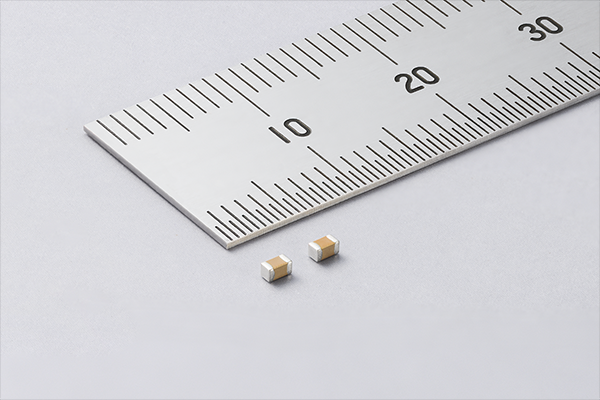
MLCC Industry Overview
MLCCs are classified by dielectric characteristics into Class I (e.g., NP0/C0G, with stable temperature coefficients, suitable for RF and oscillator circuits) and Class II (e.g., X5R/X7R, offering high capacitance, suitable for power decoupling and filtering). Currently, global high-end production capacity is highly concentrated among Japanese and Korean manufacturers. Murata, TDK, and Taiyo Yuden together account for more than 60% of global market value share, and have built substantial material and process expertise in automotive-grade AEC-Q200 and ultra-miniaturization.
Brands and Classic MLCC Series
1. Murata — Leading Global MLCC Market Share
Murata holds approximately 40% to 50% of the global automotive MLCC market, with a strategic focus on strengthening high-end products. Its general-purpose MLCCs are represented by the classic GRM series (e.g., GRM155R61A, GRM188R61E), covering full package sizes from 0201 to 2220, widely used for decoupling in consumer electronics and communication equipment. In the automotive segment, the company promotes the GCM series. Notably, the GCM21BE71H106KE02 is the world's first automotive-grade 0805-size 10 µF/50 V device, targeting 12 V bus lines and ADAS infotainment systems. Additionally, for high mechanical-stress scenarios, the GRT series of soft-termination capacitors effectively suppress cracks caused by substrate bending. In March 2026, Murata announced price increases of 15% to 35% for high-capacity MLCCs for AI servers, automotive-grade, and RF applications, reflecting tight supply in the high-end segment.
2. TDK — Specialist in High-Voltage and Automotive Solutions
TDK is recognized for its material-science strengths. Its general-purpose MLCCs are dominated by the C series (e.g., C1608 and C3216 packages in X7R dielectric). In the automotive field, TDK promotes the CGA series and the MEGACAP metal-frame series. In September 2025, TDK expanded the MEGACAP product line, adding 99 nF/1000 V (C0G) and 47 µF/100 V specifications, specifically targeting onboard chargers (OBC), wireless power transfer, and inverter snubber circuits. In June of the same year, TDK released a 1608-size 100 V/1 µF X7R MLCC, setting a record for capacitance at this voltage rating within the same package size, suitable for industrial power supplies and 48 V intermediate-bus architectures. TDK has allocated 30% of its US$4.7 billion capital expenditure over the next three years to passive-component capacity expansion, with half of that directed at automotive production lines.
3. Taiyo Yuden — Pioneer in Miniaturization and High Capacitance
Taiyo Yuden possesses distinctive competitiveness in ultra-miniature, high-capacitance MLCCs, maintaining long-term, deep partnerships with leading consumer-electronics and communication OEMs. Its general-purpose high-capacitance series are represented by the TMK and AMK models, achieving 22 µF and even higher capacitance values in 0402 and 0201 packages, meeting the stringent space constraints of smartphones and wearable devices for power stability. For AI servers and base station markets, Taiyo Yuden continues to increase capacity for high-frequency, low-loss Class I and high-voltage Class II products. In April 2026, the company announced global price increases effective May 1, following Murata in initiating a new round of industry-wide price hikes, highlighting tightening supply conditions.
Conclusion
The current MLCC market exhibits structural divergence: general-purpose, mid-to-low-end products face pricing pressure, while high-end models for AI servers, automotive, and high-frequency applications remain in short supply. For procurement and R&D functions, securing classic series from these three major brands—Murata, TDK, and Taiyo Yuden—has become a critical strategy for ensuring supply-chain resilience in the high-end segment.
Website: www.conevoelec.com
Email: info@conevoelec.com


