


AI Computing Power Ignites Passive Components: MLCC Price Increases
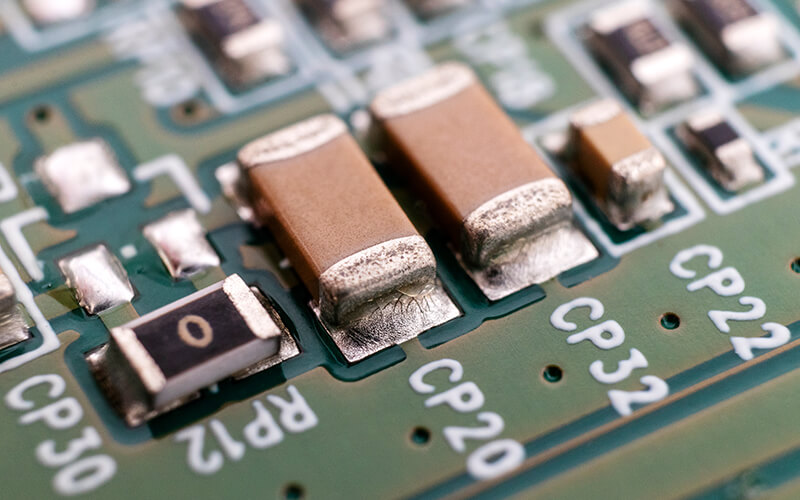 Global multilayer ceramic capacitor (MLCC) leader Murata Manufacturing recently released a pivotal signal. President Norio Nakajima publicly disclosed that the company has initiated substantive internal discussions regarding price adjustments, with plans to make a final decision on whether to raise prices by the end of March 2025. This statement marks a potential end to the MLCC industry's years-long cycle of depressed pricing, with the sector standing at the starting point of a new upward price cycle.
Nakajima's confidence in raising prices stems from explosive demand in the AI server market. According to his disclosure, current customer inquiries for AI server-related components have reached twice Murata's existing production capacity, with the supply-demand gap widening significantly. More notably, Nakajima predicts that the AI capital expenditure boom will persist for at least three years, implying that MLCCs, as core passive components in AI hardware, are entering a medium-to-long-term demand upcycle.
Samsung Electro-Mechanics Tianjin Plant at Full Capacity Triggers Price Adjustments
Concurrent with Murata's signal of potential price increases, Samsung Electro-Mechanics, the world's second-largest MLCC manufacturer, has already taken the lead in action. Reports indicate that Samsung Electro-Mechanics' largest production hub—the Tianjin plant—has reached full capacity utilization and plans to initiate its first round of price increases in April 2025.
The Tianjin plant occupies a central position in Samsung Electro-Mechanics' global manufacturing footprint. With monthly production capacity reaching 120 billion units—far exceeding the Philippines plant's 50 billion and the South Korea plant's 10 billion—it serves as the strategic stronghold for the company's three major application sectors: automotive, servers, and consumer electronics. The plant's full capacity status directly reflects robust downstream demand recovery and serves as the immediate catalyst for Samsung Electro-Mechanics' price adjustment initiative.
Capacity Squeeze and Mid-to-Low-End Market Dynamics
As the two Japanese and Korean industry leaders reach full capacity utilization, the sector is experiencing a pronounced capacity squeeze effect. Surging demand for high-margin products such as high-end AI servers and automotive electronics has compelled Murata and Samsung Electro-Mechanics to prioritize capacity allocation toward premium product lines, thereby severely constraining mid-to-low-end MLCC production capacity.
This structural shift creates a rare market opportunity for Taiwan's passive component manufacturers. YAGEO Corporation and Walsin Technology, as representative Taiwanese MLCC enterprises, possess scale advantages and cost competitiveness in the mid-to-low-end product segment. As Japanese and Korean manufacturers divert resources toward high-end markets, the supply gap in mid-to-low-end markets will be filled by Taiwanese manufacturers, with YAGEO and Walsin positioned as primary beneficiaries of this capacity transition.
Demand Drivers Behind MLCC Price Increases
The expectation of MLCC price increases is underpinned by the superimposed resonance of multiple demand factors. Regarding AI servers, MLCC consumption per unit has increased substantially compared to traditional servers, particularly in critical areas such as GPU power supply modules and power management systems, where demand for high-capacitance, high-voltage MLCCs is growing exponentially.
The automotive electronics sector similarly contributes incremental demand. As electric vehicle penetration continues to rise and autonomous driving technology evolves, per-vehicle MLCC usage has increased from approximately 3,000 units in conventional internal combustion engine vehicles to over 10,000 units in intelligent electric vehicles. Murata and Samsung Electro-Mechanics' deep positioning in the automotive market has resulted in substantial capacity absorption by high-end applications, further exacerbating supply tightness in standard product markets.
Industry Outlook: The Price Increase Cycle Likely to Persist
From an industry cycle perspective, the MLCC sector has undergone an extended period of inventory destocking and price adjustment since 2022 and currently stands at a critical inflection point where supply-demand dynamics are reversing. Murata's price increase assessment and Samsung Electro-Mechanics' concrete actions signal a gradual return of pricing power to suppliers.
Should Murata confirm its price increase decision by the end of March, other Japanese, Korean, and Taiwanese manufacturers will likely follow suit. Considering the three-year upcycle of AI capital expenditures and the long-term growth momentum of automotive electronics, once the MLCC price increase wave commences, it may persist for several quarters, delivering significant earnings elasticity to the passive component supply chain.
Conevo Featured IC Components
In this dynamic market environment, securing reliable component sourcing becomes critical for OEM and EMS manufacturers. Conevo stands as a leading global distributor of electronic components, specializing in high-demand parts including FPGA, MCU, DSP, data converters, and MLCCs. Conevo's featured ic chip recommendations:
1. AD5422BREZ-REEL: A 16-bit, serial input, voltage and current output DAC with HART connectivity, designed for industrial process control applications requiring precise analog signal generation and robust communication capabilities.
2. LP8864QRHBRQ1: An automotive-grade, quad-channel LED driver featuring high-brightness capability and advanced dimming control, optimized for exterior lighting systems in intelligent vehicles.
3. NCV7356D1R2G: A CAN transceiver qualified to AEC-Q100 standards, delivering reliable high-speed data communication for automotive networks with enhanced electromagnetic compatibility and fault protection features.
Website: www.conevoelec.com
Email: info@conevoelec.com


