


SK Hynix to Mass-Produce 375-Layer NAND Flash by Year-End
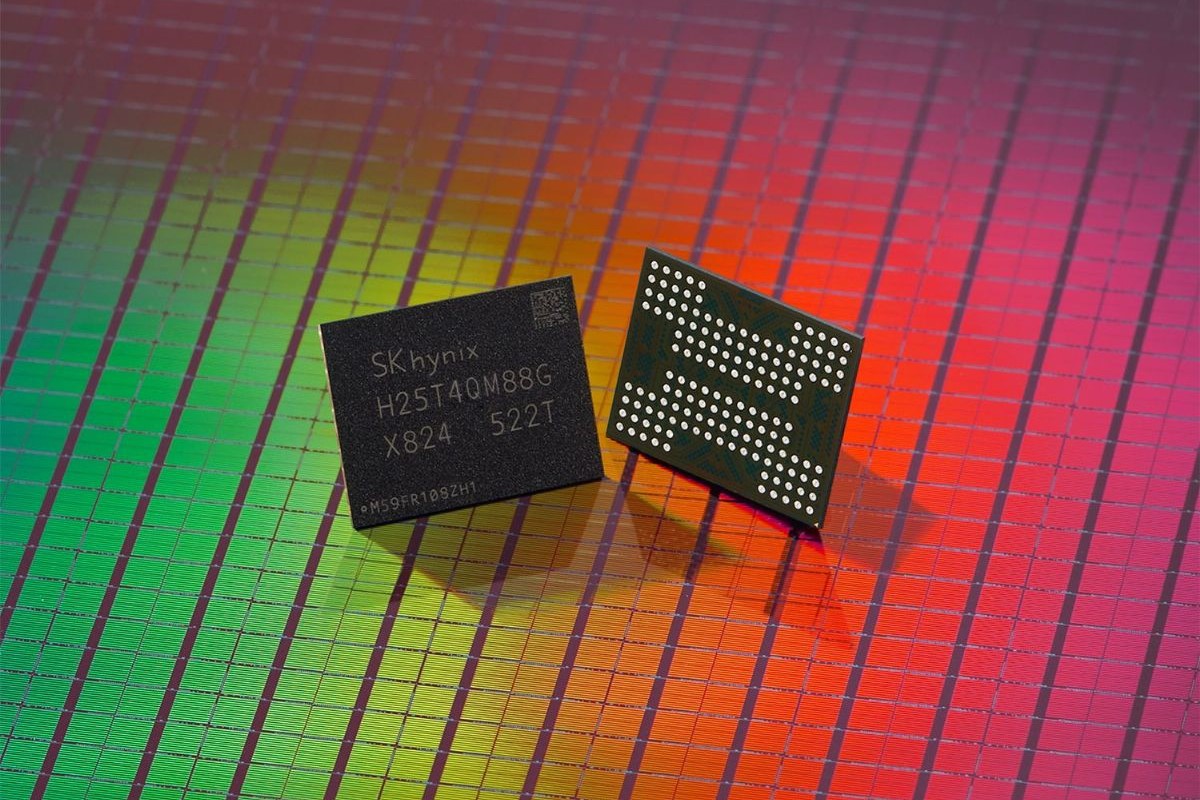
SK Hynix has completed production verification for its next-generation 375-layer 3D NAND flash memory and plans to begin mass production by the end of this year. Rather than building new fabs, the company is upgrading existing production lines at its M15 plant in Cheongju, transitioning from 176-layer, 238-layer, and 321-layer lines to 375-layer production.
Technology Roadmap Adjustment and Material Innovation
The product was originally planned as a 400-layer architecture, but the exponential increase in difficulty of core processes such as channel hole etching, driven by rising vertical stack counts, forced a revision. Constrained by mass-production bottlenecks in ultra-high-layer stacking, SK Hynix ultimately scaled the layer count down to 375. The company's technology roadmap remains clear, with 480-layer and 604-layer products scheduled for subsequent release.
To offset the performance impact of the reduced layer count, SK Hynix is introducing a major material innovation for the first time: replacing traditional tungsten (W) with molybdenum (Mo) in the word-line metal gate. As stack layers increase, tungsten-based word lines suffer from sharply rising resistance, causing signal delays, while auxiliary barrier layers progressively consume chip space. Molybdenum offers lower resistivity and can be deposited directly without additional barrier layers, effectively improving read/write speeds and storage density. However, since molybdenum precursors are solid at room temperature, demanding stringent control over high-temperature supply and process precision, SK Hynix selected Tokyo Electron's (TEL) batch deposition system, which processes approximately 100 wafers per run, delivering significant cost and efficiency advantages.
Industry Trends
The adoption of molybdenum is becoming an industry consensus. Samsung Electronics first incorporated molybdenum in its 9th-generation 286-layer V-NAND in 2024 and plans to launch products exceeding 400 layers in the second half of 2026. SK Hynix's move signals that the technology race among memory giants has entered a new phase driven by material innovation. Against the backdrop of surging demand from AI data centers and enterprise solid-state drives, the mass production of 375-layer NAND will help SK Hynix strengthen its market position and enhance per-bit profitability.
CONEVO Component Inventory Distributor
As an independent component distributor, CONEVO focuses on popular categories such as FPGA / MCU / storage IC / power management, providing one-stop procurement services for global OEM and EMS enterprises. The recent popular components include motion sensors, NOR Flash, and wireless MCUs, and the market demand is continuously increasing. The popular general IC components are as follows:
● ICM-42688-P: TDK InvenSense six-axis IMU, integrating three-axis gyroscope and three-axis accelerometer, targeting high-precision motion tracking scenarios in drones, AR/VR, and robots.
● L9369-TR: ST automotive-grade chip, used for the core control of vehicle electronic stability systems (ESP/ESC), supporting vehicle dynamic monitoring and anti-skid control, and is a key component of Bosch's ESP system.
● STM32WB55RGV6: ST ultra-low-power dual-core wireless MCU, integrating Bluetooth 5.3 and 802.15.4 multi-protocol radio, suitable for IoT, smart home, and wearable devices.
● W25Q64JVSSIQ: Hynix 64Mb SPI NOR Flash, supporting high-speed read and write at 133MHz and four I/O modes, widely used for code storage and data caching.
Website: www.conevoelec.com
Email: info@conevoelec.com


