


Aluminum Capacitor Price Surge: Japan's Top 3 Raise Prices Across the Board
In June 2026, the global aluminum electrolytic capacitor market entered a new round of price increases. Japan's third-largest aluminum capacitor manufacturer, Rubycon, officially issued a price hike notice, announcing comprehensive price adjustments effective August 1, with a second round of increases not ruled out. With this move, Japan's top three aluminum capacitor makers—Nippon Chemicon, Nichicon, and Rubycon—have all initiated price adjustments.
Earlier, Nichicon had expanded its across-the-board price increase from 9–12% to 10–15%, noting that orders for some products had exceeded existing capacity. Nippon Chemicon followed suit. China's Jianghai Capacitor (Jiangsu Jianghai) responded swiftly, issuing price adjustment letters covering aluminum electrolytic capacitors, film capacitors, and supercapacitors, with increases of approximately 5–10%, becoming the first domestic company to implement systematic price hikes.
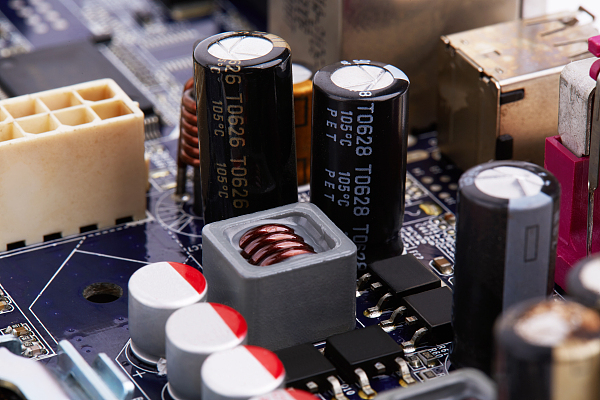
Drivers of the Price Surge
On the raw materials front, turmoil in the Middle East has driven up aluminum foil and chemical raw material prices. Chemical material costs have risen 30–40%, while metal material prices have increased by roughly 10%, making electrode foil procurement increasingly difficult. Rising electricity costs have further intensified manufacturing pressure, as electricity accounts for 60–70% of the production cost of formed foil.
On the demand side, explosive growth in AI servers, high-performance computing, and power supply systems has become the core engine driving the market. Demand for high-end aluminum electrolytic capacitors in AI server power supplies has surged, with Nichicon noting that orders for some products have exceeded capacity. As NVIDIA's next-generation Vera Rubin platform ramps up in the second half of 2026, Japanese suppliers are expected to further tilt capacity toward AI applications, intensifying the squeeze on non-AI sectors.
Price Hikes and Shortages Coexist
The market has evolved from simple price increases to a dual pressure of "rising prices and supply shortages." Japanese manufacturers' quotes have broken through the 100 yuan threshold, compared to just 30–50 yuan before the hikes. While domestic companies such as Jianghai Capacitor possess approximately 75% self-sufficiency in high-voltage formed foil and have used material localization to offset some cost pressures, they still struggle to fully absorb upstream price increases. Capacitor manufacturers' delivery lead times have extended from the normal 2–3 weeks to 3–4 months, with order backlogs reaching up to six months at peak.
Domestic Substitution and High-End Advancement
Driven by the dual forces of the price surge and AI demand, the aluminum electrolytic capacitor industry is undergoing structural transformation. Domestic manufacturers are leveraging China's abundant aluminum raw material supply to accelerate substitution in the high-end segment. Supercapacitors are expected to see rising penetration in AIDC power supply systems. Companies such as Jianghai Capacitor have already targeted AI and energy storage tracks, expanding production across all product categories to align with industry trends. Going forward, as global AI computing demand remains elevated, enterprises with material self-sufficiency capabilities and high-end product portfolios are poised to secure more favorable competitive positions.
Global distributor CONEVO relies on a full range of spot stocks including FPGA, MCU, DSP and MLCC to provide high-quality components for industrial automation and AI data centers. Hot-selling spot stocks include:
● KSZ9031RNXIA, Microchip's three-speed Gigabit Ethernet PHY, supporting RGMII and cable diagnostics.
● TPS54560DDAR, TI's wide-voltage synchronous step-down DC-DC, 4.5V-60V input 5A output.
● 10M08SAE144I7G, Intel MAX 10 FPGA, 8000 logic units 101 I/O, supporting DDR3 and LVDS.
Website: www.conevoelec.com
Email: info@conevoelec.com


