


Apple and Broadcom Sign Over $30 Billion Chip Deal
Last week, Apple officially announced a new multi-year cooperation agreement with Broadcom. The total value of the agreement is expected to exceed $30 billion, valid through 2031, making it the largest single manufacturing commitment since the launch of Apple's AMP.
15 Billion Chips and Factory Expansion
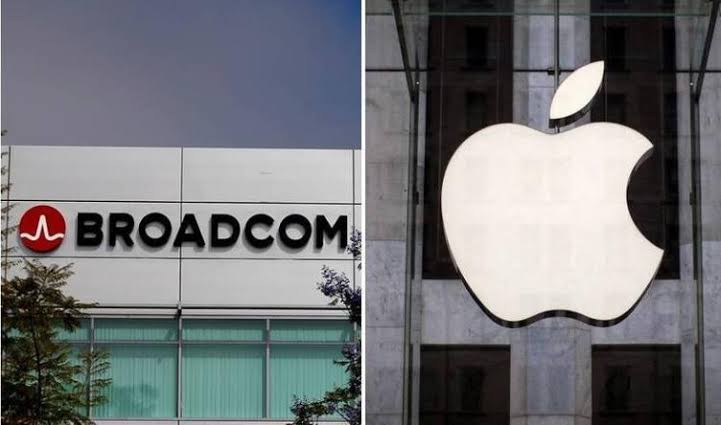 Under the terms of the agreement, Broadcom will invest $1.5 billion in capital expenditure to expand and upgrade its manufacturing facility in Fort Collins, Colorado. Upon full completion, the project is expected to cumulatively produce over 15 billion U.S.-manufactured chips, supporting hundreds of domestic jobs.
Broadcom will produce three categories of products at this facility: first, advanced radio frequency components, including FBAR (Film Bulk Acoustic Resonator) filters and other critical devices; second, wireless connectivity technologies, covering cellular network, Wi-Fi, Bluetooth, and GPS-related components; and third, custom ASIC (Application-Specific Integrated Circuit) chips developed for multiple generations of Apple products. As a core component of RF systems, FBAR filters are responsible for precisely filtering different frequency bands during wireless communication, directly affecting device connection stability and communication quality.
Strategic Rationale
This cooperation reflects clear technical realities and strategic considerations. Although Apple has accelerated its in-house chip development in recent years—launching its self-developed N1 chip across the entire iPhone 17 lineup in September 2025 to replace Broadcom's Wi-Fi/Bluetooth combo chip—RF filters represent a field where materials science and precision manufacturing are tightly coupled, making in-house production unfeasible in the near term.
As each new generation of wireless bands is added, the filter content within devices continues to grow. Broadcom's technological moat and production capacity assurance in this domain hold irreplaceable strategic value for Apple.
$600 Billion U.S. Investment Plan
This agreement is a key component of Apple's previously announced plan to invest $600 billion in the U.S. economy over the next four years. In recent years, Apple has steadily expanded its cooperation with domestic chip supply chain partners, including commitments to purchase chips from TSMC's Arizona fab, plans to procure wafers from GlobalWafers' Texas facility, collaboration with Amkor Technology to support the construction of an advanced chip packaging plant in Arizona, and a recent agreement with Intel for U.S.-based chip production.
However, the construction of a fully end-to-end U.S. chip supply chain still faces practical challenges. Taking TSMC's Arizona fab as an example, silicon wafers produced for Apple currently still need to be shipped to Taiwan for advanced packaging, meaning a true "all-domestic closed loop" has yet to be achieved. As a 200mm RF wafer fab, Broadcom's Fort Collins facility, with its deep expertise in the RF domain, precisely fills a critical gap in the U.S. chip manufacturing landscape.
IC Supply Partner — CONEVO Elec
As a leading global independent IC distributor, CONEVO specializes in high-performance semiconductors spanning FPGA, MCU, DSP, data converters, and Pmic. With over a decade of industry expertise and a global procurement network, CONEVO delivers one-stop supply chain solutions. Featured IC Recommendations:
● 10M08DCU324I7G — Intel MAX 10 FPGA, 8K logic elements, 324-UBGA, non-volatile with instant-on capability, ideal for industrial control and embedded systems.
● SN74ACT14DR — Texas Instruments hex Schmitt-trigger inverter, 14-SOIC, high-speed CMOS with hysteresis input, optimized for noise-immune digital signal conditioning.
● XCS30XL-4TQ144C — Xilinx Spartan-XL FPGA, 30K system gates, 144-TQFP, low-power reconfigurable logic for cost-sensitive applications and rapid prototyping.
Website: www.conevoelec.com
Email: info@conevoelec.com


