


Tower Semiconductor to Invest $3B in Japan Semiconductor Expansion
Israeli chip foundry Tower Semiconductor has announced a major capacity expansion plan, committing approximately $3 billion in investment and securing $1 billion in funding from the Japanese government to significantly scale up its semiconductor manufacturing capabilities in Japan. The move is aimed at capturing the explosive growth in demand driven by AI and data center optical interconnects.
Dual-Track Expansion Strategy
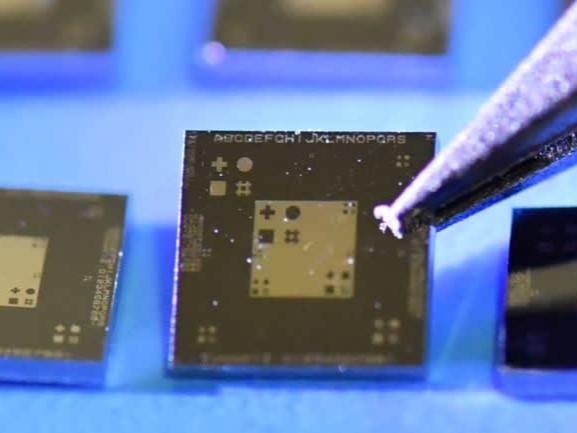 Tower is pursuing a "dual-track" strategy to drive capacity expansion.
Track One focuses on rapid volume ramp-up. The former Panasonic Semiconductor Arai facility (legacy Fab 6) will be retrofitted into a 300mm silicon photonics (SiPho) and advanced optical packaging production base, while simultaneously maximizing output from the existing Uozu Fab 7. Full production is expected by Q4 2027. Track Two takes a longer-term view. A new 300mm wafer fab will be constructed adjacent to Fab 7, which upon completion will multiply silicon photonics and silicon germanium (SiGe) capacity several-fold, with meaningful revenue contribution anticipated from 2029 onward.
Technology Platform and Market Positioning
Silicon photonics technology replaces electrical signals with optical signals for data transmission, dramatically increasing inter-chip interconnect speeds while reducing power consumption. It serves as a core enabler of optical modules in the AI-era data center. Tower has already built substantial expertise in this domain, having signed a $1.3 billion silicon photonics order in May to lock in 2027 capacity, accompanied by a $290 million customer prepayment. SiGe technology is widely deployed in optical transceiver drivers and satellite communication RF chips. Through this expansion, Tower will solidify its position as a leading global foundry for silicon photonics tape-outs.
Japan Manufacturing Footprint and Policy Alignment
The expansion builds upon Tower's established presence in Japan. In 2014, Tower partnered with Panasonic to form TPSCo, acquiring a controlling stake in the former Panasonic Semiconductor manufacturing operations and taking over 8-inch and 12-inch wafer fabs in Japan. In March 2026, Tower announced a restructuring of its Japan operations, planning to take full ownership of Uozu Fab 7, with the transaction expected to close in April 2027. The Japanese government's funding allocation forms a key pillar of its strategy to revitalize domestic semiconductor manufacturing and reduce reliance on overseas supply chains, while also generating substantial employment opportunities in the Toyama and Niigata regions.
Sourcing advanced components - CONEVO
For sourcing advanced components, Conevo Electronics is a leading global IC distributor specializing in FPGA, MCU, DSP, and converters. Currently in high demand are the following key chip models.
● XC7Z010-1CLG400I — Xilinx Zynq-7000 SoC integrating a dual-core ARM Cortex-A9 MPCore with 28K logic cells of Artix-7 programmable logic in a 400-ball CSBGA package. Industrial-grade (-40°C to 100°C), ideal for embedded vision, industrial control, and hardware-accelerated edge computing.
● HEF4069UBT,013 — Nexperia 4000B-series CMOS hex inverter in a 14-pin SOIC package. Features a wide 3V–15V supply range, low static power consumption, and full static operation. Suited for oscillator circuits, analog amplifiers, and general-purpose logic buffering.
● MT53E128M32D2DS-053 WT:A — Micron 4Gb LPDDR4X SDRAM in a 200-ball WFBGA package. Operates at 1.866 GHz with a 1.1V ultra-low voltage profile and automotive-grade temperature tolerance (-40°C to +125°C). Optimized for AI edge devices, mobile platforms, and high-performance embedded memory subsystems.
Website: www.conevoelec.com
Email: info@conevoelec.com


