


AMD and Anthropic Reach Multimillion‑Dollar AI Server Procurement Agreement
On July 22, 2026, AMD and Anthropic jointly announced a strategic partnership, with the total value of the transaction reaching hundreds of billions of dollars. Under the agreement, Anthropic will deploy up to 2 gigawatts of AMD Instinct MI450 series GPUs within AMD Helios rack‑scale solutions, with the initial 1‑gigawatt deployment scheduled to begin in the first half of 2027. Concurrently, AMD has committed to a strategic equity investment of up to $5 billion in Anthropic, to be disbursed in tranches based on mutually agreed compute deployment milestones.
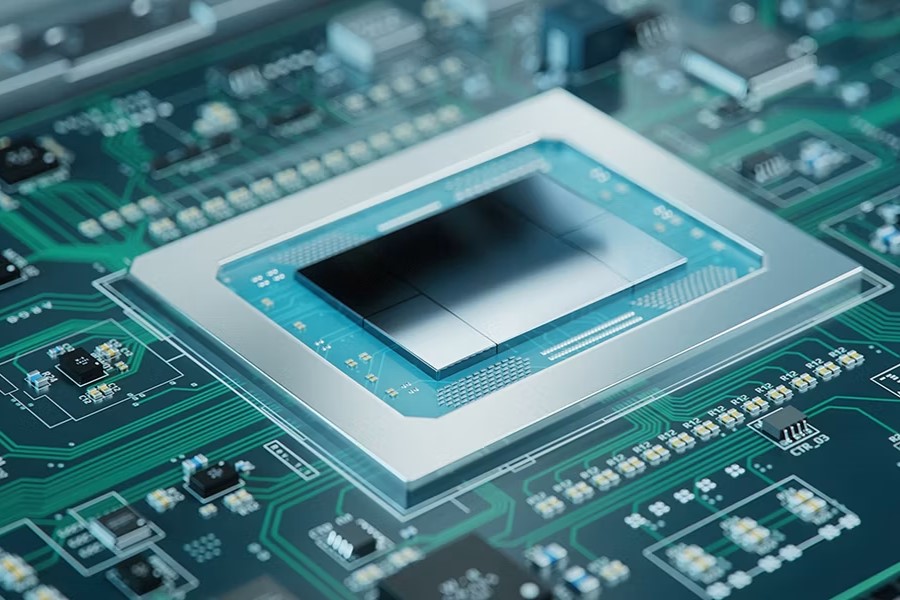
Technical Solution and Deployment Model
The AMD Helios rack‑scale solution that Anthropic will deploy is powered by AMD Instinct MI455X GPUs (part of the MI450 series), equipped with AMD EPYC “Venice” CPUs, AMD Pensando networking, and the ROCm software stack. Helios is purpose‑built for next‑generation AI training and inference, designed to meet the performance and scalability requirements of the most demanding AI workloads.
In terms of deployment, Anthropic will acquire compute capacity through two channels: a portion of the chips will be used for its own data centers, while the remainder will be accessed via large cloud service providers and emerging neocloud providers that lease AMD‑based compute capacity.
Strategic Significance
Currently, NVIDIA holds a dominant position in the AI hardware market, and AMD is accelerating its pursuit by securing large‑scale AI customers. A core challenge for AMD lies in its software ecosystem – AI companies are generally less familiar with AMD’s software stack than with NVIDIA’s, which to some extent suppresses market demand. To address this, AMD has incorporated deep engineering collaboration clauses into this partnership: both parties will leverage Anthropic’s Claude model to optimize workloads on AMD Instinct GPUs and accelerate ROCm software development, while AMD’s own engineering and product development teams will fully adopt Claude.
For Anthropic, the core value of this deal lies in alleviating compute bottlenecks. Previously, due to surging user demand, Anthropic had to temporarily restrict the frequency of user access to its AI services, and many customers reported service interruptions. Anthropic’s current compute sources already include Google TPUs, Amazon Trainium chips, and NVIDIA GPUs. The addition of AMD chips will further diversify supplier concentration risk and broaden its computing resource pool.
Conclusion
The transaction reflects two key trends in the AI infrastructure space. On one hand, chip manufacturers and AI model developers are moving toward deeper integration. On the other hand, AI companies are accelerating supply chain diversification. Notably, Dr. Lisa Su emphasized that building gigawatt‑scale AI infrastructure requires long‑term planning 12 to 24 months in advance.
CONEVO Chip Components Distributor
CONEVO is a professional independent distributor of electronic components, specializing in popular products such as FPGAs, MCUs, DSPs and memory devices. In response to urgent demands from customers, such as material shortages in production lines and replacement of production lines, CONEVO can respond quickly and provide precise matching of spot stocks and suggestions for alternative materials, effectively ensuring the continuity of production. Today's selected ic chips are as follow.
● STM8S105C6T6 (STMicroelectronics): An 8-bit mainstream MCU with a 16 MHz main frequency, 32 KB Flash, 2 KB RAM and 1 KB EEPROM, LQFP-48 package.
● ICE40LP8K-CM81 (Lattice Semiconductor): Ultra-low power non-volatile FPGA, 7680 logic units, 128Kb embedded RAM, 81-ball UCBGA package.
● XC7S100-2FGGA484I (AMD/Xilinx): Spartan®-7 series FPGA, 102,400 logic units, 4,423,680 bits of RAM and 338 I/Os, 484-FBGA package.
Website: www.conevoelec.com
Email: info@conevoelec.com


