


SK Hynix Reportedly Evaluating Intel as Foundry for HBM Base Dies
South Korean memory giant SK Hynix is actively evaluating adjustments to its supply chain strategy for key components of HBM, reportedly planning to shift partial production of base dies to Intel's foundry operations as early as the seventh-generation HBM4E product line. The move aims to establish a multi-supplier system and reduce reliance on a single foundry partner. The collaboration remains in the evaluation stage, with no final agreement yet reached.
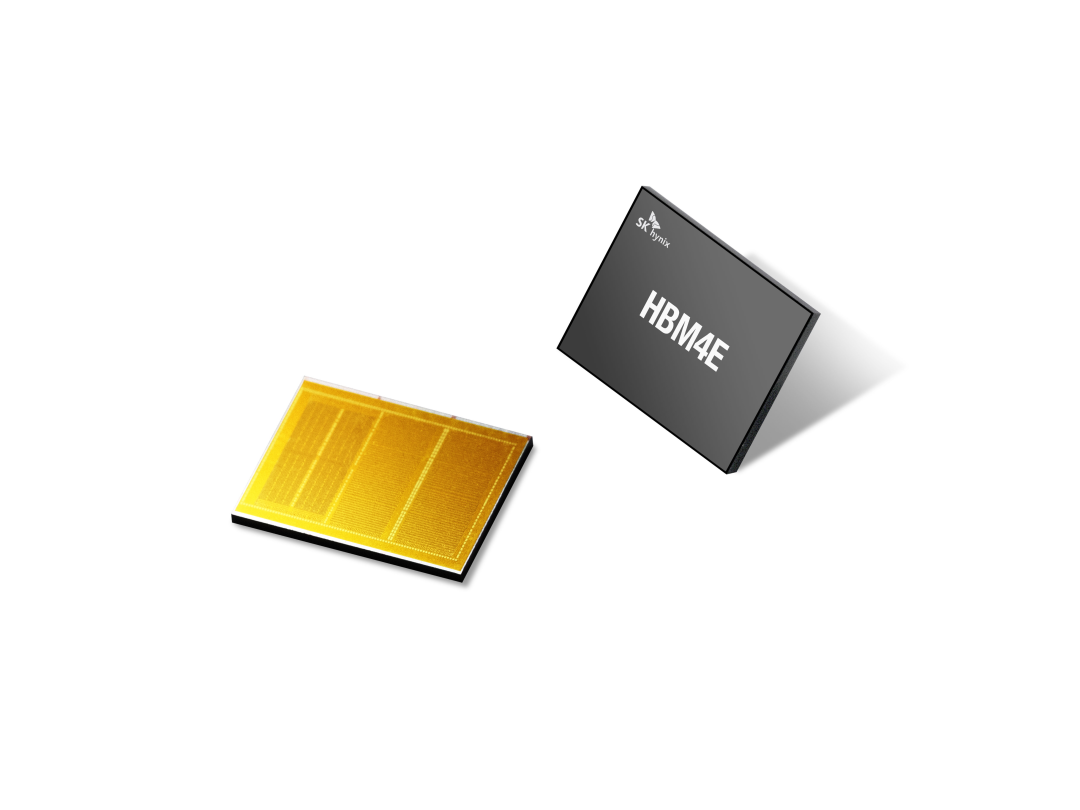 The base die serves as the bottommost logic control unit in the HBM stacking architecture, managing the vertically stacked DRAM core dies above it while providing high-speed data interfaces to external GPUs and CPUs. For the HBM3E generation and earlier, SK Hynix manufactured base dies entirely through its in-house production lines. However, starting with HBM4, the significantly increased logic complexity and performance requirements led the company to outsource production to TSMC using a 12nm-class process node, making TSMC its sole external foundry partner.
The primary driver behind SK Hynix's push for supply chain diversification is mounting cost pressure. Industry sources indicate that the per-unit cost of TSMC-fabricated HBM4 base dies is approximately three to four times that of core dies manufactured using SK Hynix's own 10nm-class fifth-generation process technology. As specifications for HBM4E base dies are expected to grow even more complex, cost burdens will likely intensify further. Compounding this challenge, HBM products are typically bound by long-term supply agreements, making it difficult for SK Hynix to pass rising foundry costs directly to end customers in the near term, thereby squeezing profit margins.
Beyond cost management, bringing Intel on board as a second foundry would strengthen SK Hynix's bargaining position with TSMC while mitigating capacity concentration risks amid growing geopolitical and supply chain security concerns. Additionally, beginning with the HBM4 generation, AI accelerator vendors such as NVIDIA, Google, and Amazon have begun requesting base die designs customized to their respective chip architectures, requiring SK Hynix to secure greater flexibility in its foundry partnerships to accommodate diverse customer needs.
Notably, the potential collaboration between the two parties may extend into advanced packaging. SK Hynix is currently evaluating multiple packaging technology options, including TSMC's CoWoS-S and CoWoS-L platforms, as well as Intel's EMIB solution.
CONEVO Hot Pick IC Recommendations
CONEVO, a global IC distributor, supplies FPGA, MCU, DSP, and power devices from stock. With global sourcing and engineering support, CONEVO helps OEMs secure quality components fast across industrial sectors.
● TPS2813P (TI) — Dual high-speed MOSFET driver delivering 2A peak output in an 8-DIP package.
● MCP1650S-E/MS (Microchip) — 750 kHz boost DC/DC controller in MSOP-8, supporting 2.7V–5.5V input and output up to 100V.
● ADA4805-2ARMZ (ADI) — Dual 105 MHz low-power, low-noise rail-to-rail op amp in 8-MSOP, 500 µA per amplifier, 3.1 nV/√Hz noise.
● FM24C04B-GTR (Infineon) — 4-Kbit ferroelectric RAM (F-RAM) with I²C interface up to 1 MHz, features 10¹⁴ write endurance, 151-year data retention, and NoDelay™ writes.
Website: www.conevoelec.com
Email: info@conevoelec.com


