


Audio Codecs: Technical Analysis and Application Guide
In today's digital age, Audio Codecs play an indispensable role. Whether in music playback, voice calls, or video conferences, Audio Codecs are responsible for converting analog audio signals to digital audio signals and vice versa. They not only determine the efficiency of audio data transmission but also directly affect the quality of sound. Efficient Audio Codecs can achieve high-quality audio transmission and storage within limited bandwidth and storage space.
What is an Audio Codec IC?
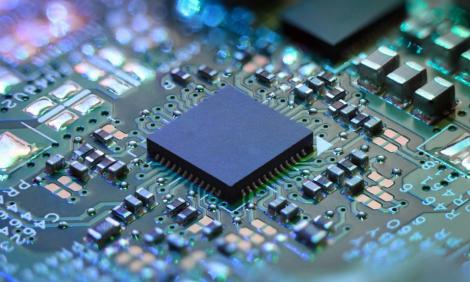
An Audio Codec IC (Audio Codec Integrated Circuit) is a chip that integrates Analog-to-Digital Conversion (ADC) and Digital-to-Analog Conversion (DAC) functions. Its basic principle is to convert analog audio signals (such as sounds input from a microphone) into digital signals for storage, processing, or transmission, and to convert digital audio signals back into analog signals to drive speakers or headphones for playback.
Audio Codec ICs typically include various digital interfaces, such as I2S and SAI, for communication with the main processor (such as an SoC or DSP). These interfaces ensure that audio data can be transmitted efficiently and accurately between different devices, meeting the high requirements for audio processing in modern audio equipment.
Audio Codec IC Selection Guide
When selecting an Audio Codec IC, it is necessary to consider factors such as application scenarios, performance indicators, interface types, and power consumption. The following are key selection points:
1.Sampling rate and bit depth are key parameters that determine the resolution and quality of the audio signal. For example, for high-fidelity audio applications, support for a sampling rate and bit depth of 96kHz/24bit is usually required.
2.Signal-to-Noise Ratio (SNR) and Total Harmonic Distortion plus Noise (THD+N) are also important indicators for measuring audio quality. High SNR and low THD+N values mean purer audio output.
3.Power consumption is also an important factor, especially in portable devices, where low-power Audio Codec ICs can extend the battery life of the device.
4.It is also necessary to consider the interface type, package form, and compatibility with the existing system of the chip to ensure that it can be smoothly integrated into the target device.
Popular Audio Codec Components
The following are some popular Audio Codecs components currently on the market. These Audio Codecs components each have their own characteristics and can meet the diverse needs from portable devices to professional audio systems.
Model | Manufacturer | Features |
ALC5651 | Realtek | Supports I2S protocol, includes ADC, DAC, DSP, Mixer, etc. |
Texas Instruments | High-performance audio ADC, suitable for professional audio equipment | |
WM8960 | Wolfson | High integration, supports multiple audio interfaces, suitable for mobile devices |
Analog Devices | Integrated DSP for audio processing, suitable for smart audio devices | |
Asahi Kasei Microdevices | High-quality DAC, suitable for audio playback devices | |
Cirrus Logic | Low power consumption, suitable for portable devices | |
Maxim Integrated | Integrated Class-D amplifier, suitable for speaker drive | |
Texas Instruments | High integration, supports multiple audio functions, suitable for complex audio systems |
Audio Codecs Usage Precautions
When using Audio Codecs, the following aspects should be noted to ensure their performance is optimized. First, power quality has a direct impact on audio quality, and low-ripple, stable power supply should be ensured. Second, audio signal wiring should avoid interference, such as keeping microphone cables away from high-frequency signal lines. In addition, when configuring Audio Codecs, parameters such as sampling rate and bit depth should be adjusted according to specific applications to avoid unnecessary resource waste or performance bottlenecks. Finally, compatibility between different Audio Codecs also needs to be considered, especially when replacing chips, which may require adjustments to peripheral circuits.
Conclusion
As a core component of audio processing systems, the importance of Audio Codecs is self-evident. From basic analog-to-digital conversion to complex audio processing functions, Audio Codecs play a key role in ensuring audio quality, reducing power consumption, and enhancing user experience. With the continuous development of technology, Audio Codecs will continue to play an important role in the audio field and drive the progress of audio technology.
Website: www.conevoelec.com
Email: info@conevoelec.com


