


A Pivot in Policy: US Ends Foreign Drone Import Restrictions
On January 9, 2026, the US Department of Commerce quietly announced via the government website the revocation of a proposed import restriction on foreign-made drones, which was originally scheduled for review by the White House in October 2025. This decision came just one month after the Federal Communications Commission (FCC) added Chinese drones to the "controlled list" citing "national security risks," sparking widespread global attention due to the policy's inconsistency.
FCC's Drone Control Plan and Its Impact
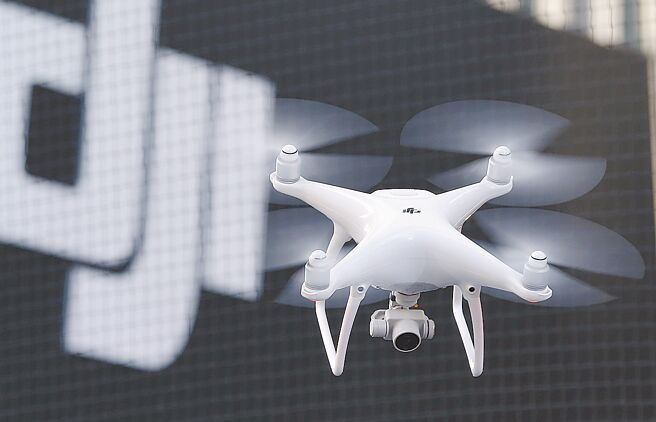 In December 2025, the FCC, citing "unacceptable risks to national security," placed all new foreign-made drones and their components on the "controlled list." Chinese drone giants DJI and Autel were the first to be affected. While this measure did not impact existing drone models from companies like DJI that had already been approved for import and sale in the US, the import and sale of new drone models or components were to be banned. Upon hearing rumors of the ban, nearly 500,000 registered drone operators and farmers immediately panicked, hoarding equipment to prevent supply disruptions.
Opposition Within the US
Multiple groups within the US expressed concerns about the FCC's ban. In December 2025, the American Soybean Association stated that abruptly restricting the use of foreign drones without domestic alternatives could add new economic and operational burdens to farmers already facing thin profits and uncertain market prospects. Additionally, DJI expressed regret over the FCC's decision, arguing that it not only limited the choice of American consumers and commercial users but also undermined the principles of an open and fair competitive market.
FCC's Exemption Measures and Reasons for Policy Shift
While the Department of Commerce revoked the restriction proposal, the FCC announced on January 7, 2026, that, based on recommendations from the US Department of Defense, some non-Chinese-made drones and key components would be exempted from the comprehensive import ban issued in December of the previous year, with the exemption valid until the end of 2026. Products approved for import mainly came from companies in France, Switzerland, and other countries, while key components included those from companies such as Nvidia, Sony, and Samsung.
There were multiple factors behind the Department of Commerce's decision. On the one hand, there was a severe disconnect between domestic industry needs and administrative orders in the US. Drones have become essential tools in key areas such as US agriculture, public safety, and infrastructure monitoring, and restricting the import of Chinese drones would have a significant impact on these sectors. On the other hand, according to Wayne, a senior research consultant at the International Crisis Group, the decision also highlighted Trump's desire to maintain the trade framework recognized by the US and China in October of the previous year and to ensure a smooth visit to China this year.
Conclusion
The US's revocation of the drone control plan is a policy adjustment made in response to domestic industry demands and international relations pressures. This incident once again highlights that in international trade, policy-making needs to fully consider the actual needs of the industry to avoid damaging market fairness and openness due to excessive politicization. In the future, as technology develops and international relations change, the policy direction in the drone field will still need to be closely monitored.
Conevo Electronic Components Distributor
Conevo focuses on the distribution business of semiconductors and electronic components, offering a wide range of IC parts, including integrated circuits , passive components, semiconductor discrete devices, connectors, optical products, etc. Here are some popular IC chips from Conevo.
● LM5007MMX/NOPB: A switching voltage regulator controller, suitable for various power conversion applications, featuring high efficiency and low static current.
● ADG508AKRZ: An 8-channel analog switch with low on-resistance and fast switching speed, suitable for high-precision signal switching applications.
● STM32L051C8T6TR: A low-power 32-bit microcontroller with multiple peripheral interfaces and high-performance processing capabilities, suitable for Internet of Things and portable devices.
Website: www.conevoelec.com
Email: info@conevoelec.com


