


Hot-Selling Chip Procurement Guide: In-Depth Analysis of Five Popular Devices
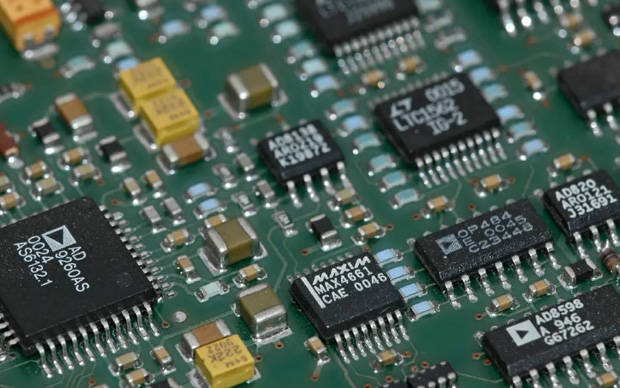 In the field of electronic design, chip selection directly determines product performance and market competitiveness. This article focuses on five currently best-selling core devices-covering power management, microcontrollers, memory, RF, and data storage-to provide engineers and procurement professionals with precise technical references and selection recommendations.
1. TPS51285BRUKR: Multi-Channel Power Management Core Solution
The TPS51285BRUKR is a highly integrated Power Management IC (PMIC) featuring D-CAP™ control architecture, specifically designed for complex power supply scenarios. This device integrates dual synchronous buck controllers and dual linear regulators (LDOs), capable of stable operation across a wide input voltage range of 5V to 24V. Output channels 1 and 2 operate in controller mode, channel 3 provides a regulated 3.3V/100mA output, and channel 4 serves as a general-purpose LDO.
The chip supports two switching frequency options of 400kHz and 475kHz, adopts a 20-WQFN package, and covers an industrial-grade operating temperature range of -40°C to 85°C. Its multi-channel architecture is particularly suitable for notebook computers, server motherboards, and communication equipment requiring coordinated multi-rail power supply, effectively simplifying power design and improving system energy efficiency.
2. STM32F207VET6: Industrial-Grade High-Performance Microcontroller
The STM32F207VET6 is based on the ARM® Cortex®-M3 core with a maximum frequency of 120MHz, making it an ideal choice for industrial automation and IoT gateway applications. This microcontroller features 512KB Flash program memory and 132KB SRAM, integrates 16-channel 12-bit ADC and dual-channel 12-bit DAC, and provides 82 general-purpose I/O ports.
In terms of communication interfaces, the device is equipped with CAN bus, Ethernet MAC, USB OTG, multiple UART/USART, SPI, and I²C interfaces, supporting memory card interfaces and IrDA infrared communication. This 32-bit microcontroller is particularly suitable for high-performance embedded applications such as industrial PLCs, smart meters, security surveillance, and medical equipment.
3. MT25QL256ABA1EW9-0SIT: High-Capacity Serial NOR Flash Memory Solution
The MT25QL256ABA1EW9-0SIT is a 256Mb (32MB) serial NOR Flash memory featuring standard SPI interface with x4 I/O mode support, maximum clock frequency of 133MHz, and data transfer rates up to 160MT/s. The device operates at 3.0V supply voltage, is organized as 64M×4 bits, and comes in an 8-WDFN package.
With an industrial-grade temperature range of -40°C to +85°C and data retention capability of up to 100 years, this NOR Flash chip is widely used in embedded system program storage, FPGA configuration loading, network equipment firmware storage, and automotive electronics. Its high reliability and fast random read characteristics (typical access time in the tens of microseconds range) make it an ideal non-volatile storage solution for applications requiring frequent code execution and rapid boot-up.
4. ADF41020BCPZ: 18GHz High-Frequency PLL Frequency Synthesizer
The ADF41020BCPZ is a high-performance PLL (Phase-Locked Loop) frequency synthesizer with operating frequencies up to 18GHz, suitable for wireless infrastructure, satellite communications, and test and measurement equipment. The device integrates a programmable prescaler, phase detector, and charge pump, supports CMOS/TTL logic level inputs, features PLL bypass functionality, and can construct a complete frequency synthesis system through external loop filters and voltage-controlled oscillators (VCOs).
The chip adopts a 20-LFCSP package, operates at 2.85V to 3.15V supply voltage, and covers an industrial temperature range of -40°C to 85°C. Its high-frequency characteristics and low phase noise performance make it an ideal clock source solution for microwave point-to-point communications, radar systems, software-defined radio (SDR), and high-end instrumentation applications.
5. AT24C16C-SSHM-T: Industrial-Grade I²C Serial EEPROM
The AT24C16C-SSHM-T is a 16Kbit (2K×8-bit) serial EEPROM featuring I²C-compatible two-wire interface, maximum clock frequency of 1MHz, and wide voltage operation from 1.7V to 5.5V. The device comes in an 8-SOIC package, with maximum random access time of 550ns, typical write cycle of 5ms, hardware write protection capability, and Schmitt trigger input for noise suppression.
With 1 million write cycle endurance and 100-year data retention capability, this chip is widely used in consumer electronics, industrial control, and automotive electronics, particularly suitable for storing critical information such as system configuration parameters, calibration data, and user settings. Its low power consumption characteristics (operating current 3mA) and industrial temperature range (-40°C to 85°C) make it an ideal choice for battery-powered devices and outdoor applications.
More Recommended Hot-Selling Models
In addition to the five core devices mentioned above, the following ic models are also worthy of engineers' attention:
Application Area | Recommended Model | Key Features |
Power Management | TPS51275C | Dual synchronous buck controllers, wide temperature operating range |
Microcontroller | STM32F103RCT6 | ARM Cortex-M3, 256KB Flash, cost-effective choice |
Memory | W25Q128JVSIQ | Winbond 128Mb NOR Flash, SPI interface, industrial-grade |
RF | ADF4351 | Integrated VCO wideband frequency synthesizer, 137.5MHz-4.4GHz |
EEPROM | AT24C256C | 256Kbit large capacity, I²C interface, automotive-grade certification |
Conclusion
Chip selection is a core aspect of electronic design, requiring comprehensive consideration of performance specifications, cost structure, supply chain stability, and long-term technical support. The five chips recommended in this article are all from top-tier industry manufacturers, have been long-term market-validated, and demonstrate excellent performance in terms of functionality, reliability, and supply stability. When making selections, engineers should combine specific application scenarios' power budgets, space constraints, and environmental requirements to choose the optimal device combination for building high-performance, high-reliability electronic systems.
Website: www.conevoelec.com
Email: info@conevoelec.com


