


Rohm and Toshiba in Talks to Integrate Power Semiconductor Businesses
In March 2026, Japanese semiconductor manufacturers Rohm and Toshiba officially entered negotiations to integrate their power semiconductor businesses. According to informed sources, the two companies are exploring multiple integration frameworks, including the establishment of a joint venture company, with the intention of transferring both firms' power semiconductor operations to a new entity.
Collaboration Foundation and History
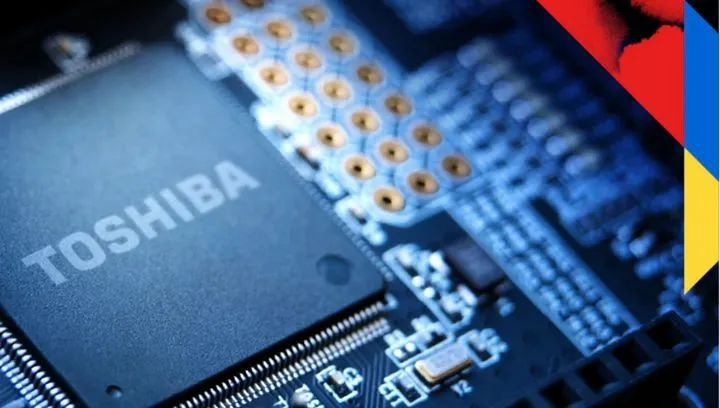 Rohm and Toshiba have built a deep cooperative relationship in the power semiconductor sector. When Toshiba delisted in 2023, Rohm contributed 300 billion yen to the Japanese domestic consortium that acquired Toshiba, becoming a significant shareholder through the subscription of common and preferred shares. At the operational level, the two companies had previously formed a production collaboration partnership, jointly advancing the technological development and production capacity deployment of next-generation power devices such as silicon carbide (SiC).
However, this collaborative relationship encountered turbulence in August 2025—when a Toshiba subsidiary announced a technology cooperation agreement with a Chinese SiC wafer manufacturer, triggering strong opposition from Rohm, after which Toshiba terminated the agreement.
Defensive Integration Amid Denso Acquisition Pressure
The Rohm-Toshiba business integration negotiations coincide with an acquisition offensive launched by Denso, the automotive components giant under the Toyota Group. In February 2026, Denso formally submitted an acquisition offer to Rohm, proposing to acquire the remaining approximately 95% stake at a valuation of roughly 1.3 trillion yen (approximately $8.2 billion). Should this transaction be completed, it would represent a rare case of downstream customer-led integration in Japan's semiconductor industry.
Confronted with Denso's acquisition pressure, Rohm has established a special committee to review the offer. The integration with Toshiba is regarded as a critical alternative strategy for Rohm to counter Denso's proposal—by creating an independent power semiconductor alliance, Rohm can maintain operational autonomy while leveraging Toshiba's manufacturing capabilities and market share to enhance competitiveness.
Integration Trends in a Fragmented Landscape
Japan's power semiconductor industry has long faced structural challenges of fragmented production capacity and insufficient scale. Current market participants include Renesas Electronics, Rohm, Fuji Electric, Mitsubishi Electric, and others. this fragmented state of individual operations has rendered cost competitiveness difficult to match against Chinese manufacturers. The Japanese government has explicitly promoted industry consolidation, planning to encourage companies to form joint ventures through substantial subsidies, with the target of achieving domestic semiconductor sales of 40 trillion yen by 2040.
Denso itself is also advancing a vertical integration strategy for power semiconductors, having established a joint venture with Fuji Electric in 2024. Against this backdrop, should the Rohm-Toshiba integration materialize, it would create an industrial force capable of competing with the "Denso-Fuji Electric" alliance, reshaping Japan's power semiconductor competitive landscape.
It is worth noting that the final implementation of the integration plan faces multiple variables. Denso already holds nearly 5% of Rohm's shares, and the two companies established a development collaboration for electric vehicle sensor analog semiconductors in May 2025. Should Rohm opt for integration with Toshiba, Denso may need to invest additional time and capital to complete the acquisition of the integrated entity, significantly increasing transaction complexity.
CONEVO Spot Inventory Distributor
Conevo focuses on core components such as FPGA, MCU, DSP, data converters, MLCC, etc. It is an electronic component spot inventory distributor. Conevo is committed to providing high-quality, traceable original factory genuine components to global OEM and EMS enterprises, helping customers shorten the R&D cycle and reduce supply chain risks. Recently, the recommended popular inventory models of Conevo are as follows.
● QS32X245Q2G: High-speed CMOS bidirectional bus switch, optimized for low-power applications
● XC95288XL-10TQG144I: Xilinx CoolRunner-II series complex programmable logic device, integrating 288 macro cells
● AD9779ABSVZ: Dual-channel 16-bit high-speed digital-to-analog converter, sampling rate up to 1 GSPS
● ADM7172ACPZ-1.8-R7: Ultra-low noise, high PSRR low-dropout linear regulator, fixed 1.8V output
Website: www.conevoelec.com
Email: info@conevoelec.com


