


Sony CIS Yield Crisis: Supply Chain Concerns for Apple
Sony Semiconductor Solutions is facing a severe test of its flagship product line. The latest generation of CMOS image sensors (CIS) produced at the Nagasaki Technology Center (Nagasaki TEC) in Japan is encountering yield ramp-up challenges. This manufacturing facility accounts for over 80% of Sony's smartphone image sensor sales, and its production stability is directly linked to the security of the global high-end mobile imaging supply chain.
Supply Chain Risks Under Apple's Dependency
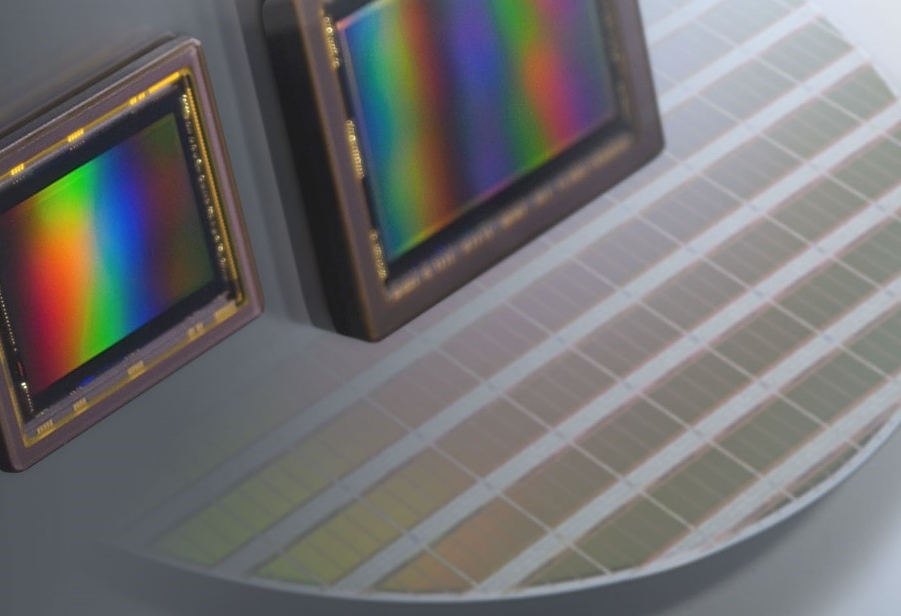 The sensitivity of this yield crisis stems from the highly integrated supply relationship between Sony and Apple. Data indicates that 55% of Sony's smartphone CIS revenue comes from Apple orders. The 48-megapixel main camera sensor (IMX803) used in the iPhone 15 series and the periscope telephoto lens (IMX913) in the iPhone 15 Pro Max are exclusively supplied by Nagasaki TEC. This deep coupling means that any production fluctuation at the Nagasaki facility could directly impact Apple's new product launch schedule.
Notably, Apple has initiated supply chain diversification efforts. According to TechInsights analysis, Apple is coordinating with Samsung Electronics to introduce Samsung CIS as an alternative solution in iPhones sold globally. Samsung has developed image sensors employing triple-wafer stacking technology (separating photodiodes, transistors, and ADCs), with shipments to Apple expected to commence from its U.S. base in 2027.
Yield Issues Rooted in R&D-Manufacturing Disconnect
The underlying cause of Sony's CIS yield problems lies in its organizational "silo culture." Sony Semiconductor CTO Yosuke Oike admits that in pursuit of operational efficiency during scale expansion, the company overemphasized functional division, leading to divergent goals between R&D and manufacturing departments. R&D focuses solely on technological breakthroughs while neglecting manufacturing feasibility, whereas manufacturing struggles to address mass production challenges arising from insufficiently validated designs.
This disconnect is particularly pronounced at Nagasaki TEC. Historically, the facility has transitioned between Toshiba and Sony and undertaken joint R&D tasks for multiple companies, cultivating a unique "multicultural soil." Although Sony has attempted to bridge these differences through enhanced communication mechanisms, organizational distortions resulting from rapid capacity expansion ultimately manifested as a "yield crisis."
Competitive Industry Landscape
While Sony addresses its internal crisis, the global CIS industry is undergoing structural realignment. In 2024, Chinese vendors GalaxyCore and OmniVision captured second and third market positions with growth rates of 34% and 14% respectively. Although Sony maintained its leading position with a 55% market share, its growth momentum has clearly weakened.
More severe challenges emerge on the technological front. In 2025, domestic vendor SmartSens' SC595XS sensor surpassed Sony's flagship IMX989 (63.6dB) in dynamic range metrics (110dB), marking a critical breakthrough for Chinese manufacturers in the high-end smartphone CIS segment.
Faced with dual pressures from yield crises and intensifying competition, Sony is attempting to rebuild its advantages through multiple initiatives. On one hand, the company is accelerating yield improvement for its 2-Layer Transistor Pixel technology, which has gained broader adoption in the iPhone 17 series. On the other hand, Sony plans to construct a new image sensor factory in Kumamoto Prefecture, creating synergies with TSMC's Japan Advanced Semiconductor Manufacturing (JASM) facility to diversify production concentration away from Nagasaki TEC.
CONEVO: Strategic Component Sourcing Partner
CONEVO stands as a premier global distributor specializing in high-performance integrated circuits, offering comprehensive procurement support across power management ICs (PMIC), precision analog switches, DC-DC converters, and advanced passive components. Here are some popular IC models.
● LM5013QDDARQ1: Automotive-grade 100V/3.5A synchronous buck converter with AEC-Q100 Grade 1 qualification, featuring ultra-low EMI optimization for CISPR 25 Class 5 compliance and 10µA no-load sleep current ideal for EV powertrain systems.
● DG333ADW-E3: Vishay precision quad SPDT analog switch delivering 25Ω typical on-resistance with 175ns/145ns switch timing, designed for high-accuracy signal routing in test equipment and portable instrumentation applications.
● TPS62932DRLR: TI's 3.8V-30V input synchronous buck converter offering 95% peak efficiency and 2A output capability, optimized for industrial and automotive power management with programmable 200kHz-2.2MHz switching frequency.
Website: www.conevoelec.com
Email: info@conevoelec.com


