


AC/DC and DC/DC Converters Explained: Core Components of Power Conversion
From smartphone chargers to new energy vehicle electronic control systems, from data center servers to photovoltaic inverters, AC/DC and DC/DC converters are ubiquitous. Their technological evolution directly impacts the energy efficiency, size, and reliability of electronic devices.
I. AC/DC Converters: The Bridge from AC to DC
AC/DC converters (rectifiers) are responsible for converting grid alternating current (AC) into the direct current (DC) required by electronic devices. Their workflow consists of three stages: rectification, filtering, and voltage regulation. Some high-performance products also incorporate a power factor correction (PFC) stage.
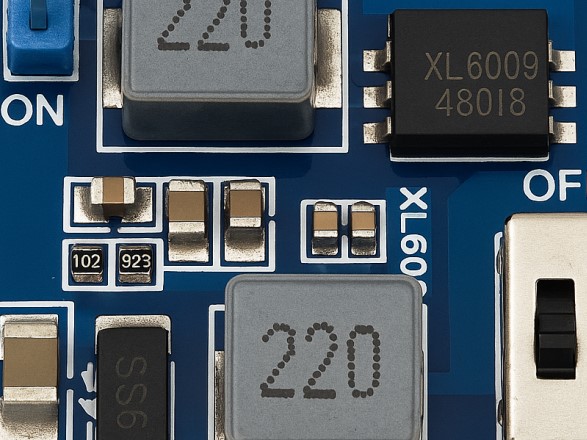 The working principle of AC/DC converters involves three sequential steps. First, a rectifier bridge composed of diodes or thyristors converts AC into pulsating DC. Then, large-capacity electrolytic capacitors are employed for filtering and smoothing. Finally, linear or switching voltage regulation circuits output stable DC. Modern switching power supply solutions utilize high-frequency switching technology (operating frequencies ranging from tens of kilohertz to several megahertz), achieving precise voltage regulation through duty cycle control, with efficiencies reaching 80%-95%.
AC/DC converters are primarily applied in scenarios including mobile phone/laptop chargers (10W-100W), industrial PLC and inverter power supplies (DC 24V/48V), and photovoltaic inverter front-end rectification (several kilowatts to hundreds of kilowatts). Classic AC/DC converter models include:
● Power Integrations InnoSwitch Series (e.g., INN2215K): High integration, compact packaging, widely used in power adapters and chargers
● Texas Instruments UCC2871x Series: Achieves isolated constant voltage and constant current output regulation without optocouplers
● Wuxi Silan Microelectronics SP2738CF: Primary-side feedback control, suitable for high power density, compact adapters
II. DC/DC Converters: Precision Regulators of DC Voltage
DC/DC converters (DC choppers) perform voltage transformation within the DC domain, utilizing high-frequency switching transistors to control inductor energy storage and release, thereby accomplishing step-up, step-down, or buck-boost functions. Their three core components are the switching transistor, inductor, and capacitor, with output voltage precisely controlled by adjusting the duty cycle.
Three Fundamental Topologies:
Topology Type | Function | Typical Application |
Buck (Step-Down) | High voltage to low voltage conversion | 12V to 5V/3.3V motherboard power supply |
Boost (Step-Up) | Low voltage to high voltage conversion | 3.7V lithium battery boosted to 5V |
Buck-Boost | Flexible step-up/step-down switching | Battery discharge voltage fluctuation scenarios |
Popular DC/DC Converter Chip Models:
● Texas Instruments LM2596: Classic step-down chip, input 4.5V-40V, output 3A, efficiency 75%-90%, widely used in automotive power supplies and industrial equipment
● MPS MP1584: High-frequency 1.5MHz switching, input 4.5V-28V, output 3A, compact size with high efficiency, suitable for portable devices and drones
● Texas Instruments TPS5430: Synchronous rectification technology, input 5.5V-36V, strong anti-interference capability, suitable for industrial control and automotive electronics
● Xlsemi XL4015: High current 5A output, input 8V-36V, excellent cost-performance ratio, suitable for LED drivers and battery charging
III. Technological Evolution and Selection Guidelines
Current AC/DC and DC/DC converters are evolving toward higher efficiency, smaller size, and intelligent control. The transition from linear power supply resistive dissipation regulation to switching mode power supply high-frequency energy storage conversion has resolved the issues of bulky size and low efficiency inherent in traditional solutions. Presently, gallium nitride (GaN) materials, leveraging their wide bandgap and low switching loss characteristics, have overcome the thermal generation bottlenecks of silicon-based high-frequency operation, enabling switching frequencies to reach megahertz levels and significantly reducing magnetic component size. Combined with LLC resonant topology for zero-voltage switching, conversion efficiency can reach 98%.
When selecting an appropriate voltage converter, the following key selection criteria should be prioritized:
1. Voltage Matching: Confirm that input and output voltage ranges align with load requirements
2. Current Capability: Select chip rated current at 1.2-1.5 times the maximum load current
3. Efficiency Priority: Higher switching frequencies enable smaller passive component sizes, but switching losses must be carefully balanced
4. Protection Features: Prioritize models integrating overvoltage, overcurrent, and overtemperature protection
In summary, AC/DC and DC/DC converters serve as the core carriers of power electronics technology - the former addressing the "AC to DC" conversion challenge, while the latter enables "precise regulation of DC voltage." Working in synergy, they collectively support the power supply infrastructure for consumer electronics, industrial control, new energy, and numerous other domains.
Website: www.conevoelec.com
Email: info@conevoelec.com


