


Russia Imposes Helium Export Controls
On April 14, 2026, the Russian government officially announced temporary export controls on helium, with the measures set to remain in effect until the end of 2027. Under the relevant decree, helium has been included in a specific list of commodities, and exports to destinations outside the EEU require special authorization from the Prime Minister or his deputy. Officials stated that this measure aims to prioritize supply stability in the domestic market. Helium, a critical raw material for optical fiber production, is increasingly being utilized by the military in drone control systems.
The imposition of these controls comes at a time when global helium supplies have tightened sharply due to the war in the Middle East. In early March 2026, Iran launched multiple attacks on Qatar's Ras Laffan Industrial City, forcing QatarEnergy to declare force majeure and halt production of liquefied natural gas and related byproducts. As the world's second-largest helium producer, Qatar contributed over 30% of global helium supply in 2025. The disruption to its production capacity has removed approximately one-third of global helium supply from the market.
Russia's Helium Industry and Production Capacity
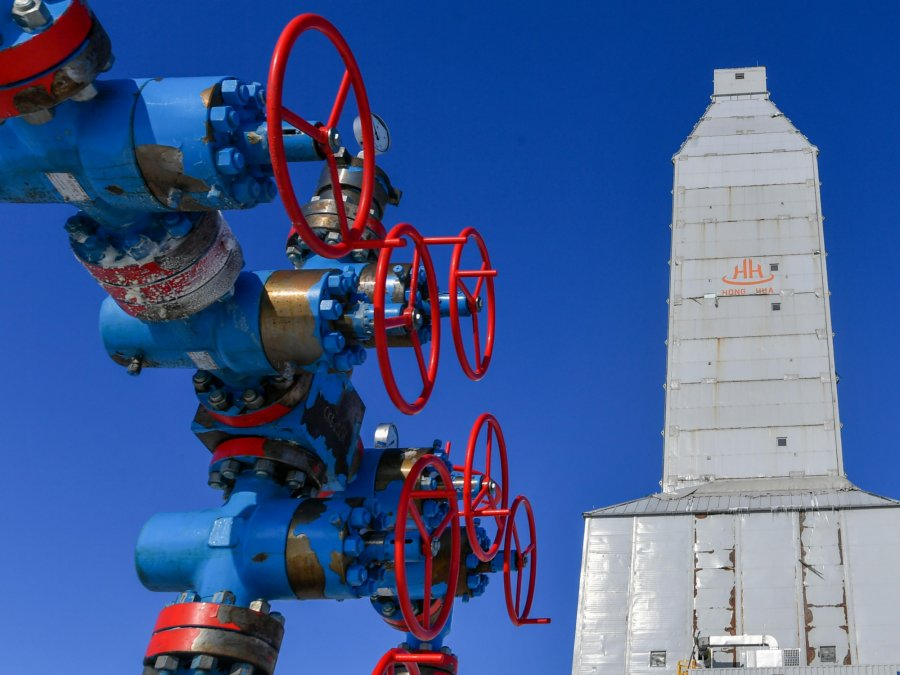 According to data from Gazprombank, Russia is the world's third-largest helium producer, accounting for approximately 8% to 10.5% of global output. The Amur Gas Processing Plant in Russia's Far East serves as the country's largest helium production base, with a designed annual capacity of 60 million cubic meters, complemented by facilities such as the Orenburg Helium Plant.
Although Russia's production volume trails that of Qatar and the United States, the country possesses significant growth potential in the helium sector. In 2025, Russia produced approximately 20 million cubic meters of helium, while domestic consumption stood at just over 4 million cubic meters, leaving substantial surplus capacity available for export. Russian Prime Minister Mikhail Mishustin had previously stated that the global supply disruption caused by the Middle East war creates new trade opportunities for Russia, with helium identified as one of the commodities that Russia could potentially increase exports of in the future.
Cascading Impact on Global Supply Chains
As a byproduct of natural gas processing, helium plays an irreplaceable role in semiconductor manufacturing, covering critical applications such as wafer cooling, leak detection, precision manufacturing processes, and lithography equipment operation. Major global chip manufacturers—including TSMC, Samsung Electronics, and SK Hynix—are all heavily dependent on helium supplies.
Russia's export controls have compounded the effects of Qatar's supply disruption, further exacerbating tensions in the global helium market. Spot helium prices have doubled since the outbreak of the crisis, with contract surcharges exceeding 30%. South Korea, as a semiconductor industry hub, sourced 64.7% of its helium imports from Qatar in 2025 and now faces severe supply security risks. Market analysts note that if Qatar's production capacity cannot be restored in the short term, global semiconductor production may face substantive constraints.
Russia's Helium Dilemma
Russia's ability to fill the global supply gap still faces multiple obstacles. On one hand, Western sanctions restrict Russian helium from entering the supply chains of Western chip manufacturers. On the other hand, a shortage of specialized cryogenic storage tanks for helium also constrains Russia's export capacity. Furthermore, Russian helium has not yet obtained supply qualification certification from wafer fabrication plants and is currently used primarily in non-semiconductor sectors, thereby indirectly freeing up certified helium supplies for the chip industry.
CONEVO Chip Component Supplier
CONEVO Electronics is a leading distributor of electronic components, specializing in a wide range of components such as FPGAs, MCUs, DSPs, data converters, and memory chips. It provides high-quality components and engineering solutions for industries such as aerospace, automotive electronics, industrial control, and medical equipment. Here are several selected popular IC devices:
● ADS1260BIRHBR: A 32-bit Δ-Σ analog-to-digital converter, integrating a programmable gain amplifier and a temperature sensor, suitable for industrial process control and precision measurement systems.
● EP2AGX45DF29C5N: Arria II GX series FPGA, integrating transceivers and abundant logic resources, specifically designed for communication infrastructure and high-speed data processing applications.
● XCKU5P-L1SFVB784I: Xilinx low-power FPGA, providing high-performance DSP and high-speed serial connection capabilities, suitable for 5G base stations and video processing.
● 10M08SCU169I7G: MAX 10 series CPLD/FPGA, integrating flash memory and ADC, widely used in industrial control and edge devices of the Internet of Things.
Website: www.conevoelec.com
Email: info@conevoelec.com


