


CPU Prices Surge as Intel and AMD Continuous Price Increase of Up to 20%
Since March 2026, consumer-grade CPU prices have risen by 5% to 10%, while server CPU prices have surged by 10% to 20%. Supply chain sources indicate that both Intel and AMD are preparing further price increases for Q3, even as average CPU lead times have extended dramatically from 1–2 weeks to 8–12 weeks.
Price Hikes and Extended Lead Times
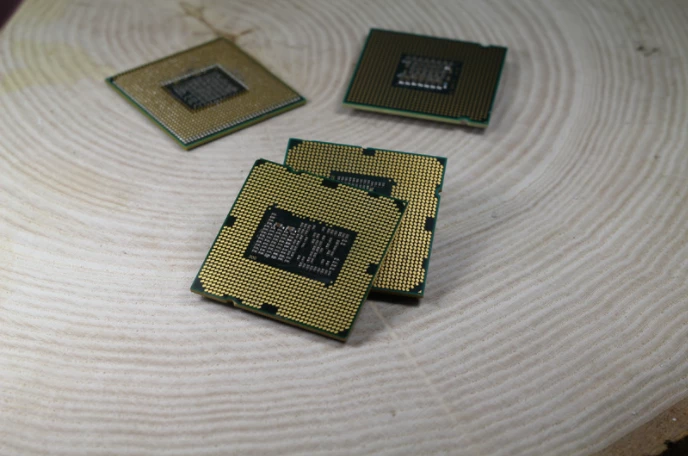 Intel raised PC CPU prices in March and further adjusted server CPU pricing on April 1, a move that directly boosted the company's Q2 gross margin. Market expectations point to another 8% to 10% price hike in the second half of 2026. If realized, this would mark Intel's third consecutive CPU price increase this year.
AMD plans two rounds of price hikes for its server CPU lineup in Q2 and Q3, with a cumulative increase of approximately 16% to 17%. Its consumer-grade CPUs saw prices rise starting in March, with some models up by as much as 15% compared to last year's quotes.
Beyond pricing, CPU lead times have stretched significantly. Since late February, PC manufacturers including HP and Dell have observed a widening gap between their CPU demand and actual supply availability—a situation far more severe than just months ago. Average CPU lead times have ballooned from roughly 1–2 weeks to 8–12 weeks.
Core Drivers Behind the Surge
This round of CPU inflation is driven by two primary forces. First, rapidly surging demand for AI servers has significantly boosted CPU consumption. Second, advanced process capacity remains highly concentrated, leaving supply unable to respond promptly to market demand. This supply-demand imbalance is further amplifying price pressure.
As AI inference demand continues to explode, AI server and data center build-outs are accelerating, compounded by cloud vendors' expanding capital expenditure, which has markedly lifted demand for high-performance CPUs. Yet advanced process capacity is concentrated among a handful of foundries, with 3nm node resources being fiercely competed for by GPUs, ASICs, and other AI chips, severely constraining CPU supply elasticity.
Capacity Bottlenecks and Supply Adjustments
Capacity bottlenecks represent the core contradiction behind current CPU supply tightness. Intel is working to ramp up internal fab output, but volume production will take time, while the company also faces constraints in chip substrate supply. To address mounting capacity pressure, Intel recently announced a $14.2 billion buyback of the 49% stake in its Ireland Fab 34, regaining full capacity control over the facility.
AMD, which outsources all manufacturing to foundries such as TSMC and Samsung, is forced to compete directly for capacity against AI chip giants including NVIDIA and Google. TSMC's continued expansion of 3nm capacity is driven primarily by the simultaneous explosion in demand from both CPUs and AI ASICs.
CONEVO IC Components Distributor
CONEVO is a global professional electronic component distributor, specializing in scarce materials, popular ICs, and discontinued parts. With a global supply chain network and a professional quality inspection system, CONEVO can quickly respond to the urgent part shortageneeds of customers in industries such as industrial, communication, and automotive, ensuring original quality and stable delivery. The selected IC parts for today are as follows.
● NCP1252ADR2G: onsemi current-mode PWM controller, designed specifically for flyback and forward topologies, supporting a 500kHz switching frequency and a 9–28V wide input voltage range
● THVD1450DRBR: TI industrial-grade half-duplex RS-485 transceiver, featuring 50Mbps high-speed transmission and ±18kV IEC ESD protection capability
● GD25Q16ESIGR: Macronix 16Mbit SPI NOR Flash memory, supporting four I/O channels and a 133MHz high-speed clock, operating at 2.7–3.6V low power consumption
Website: www.conevoelec.com
Email: info@conevoelec.com


