


Nvidia Locks InP Capacity For $4 Billion
Lumentum's CEO, Michael Hurlston, recently publicly warned that although the company operates five indium phosphide (InP) wafer factories, the output of EML lasers over the past three years has increased eightfold, yet the company's laser shipments are still 30% lower than customer demand. "Even the combined efforts of Lumentum and Coherent cannot meet the demands of NVIDIA and other companies for solving the resistance problem in data centers at present." Hurlston further warned that the compound semiconductor InP is facing a more severe supply shortage than DRAM/NAND.
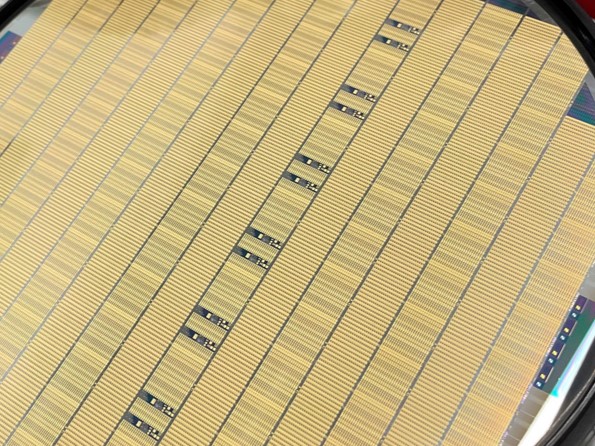 Indium phosphide is an indispensable material for EML lasers and detectors in 800G/1.6T high-speed optical modules. With the surge in AI inference workloads, the demand for optical interconnection has increased exponentially, and the demand for InP substrates for a single 1.6T optical module is 2.7 to 3 times that of 800G. NVIDIA predicts that its demand for InP wafers in data centers will increase by approximately 20 times from 2026 to 2030.
Nvidia $4 Billion Lock Capacity
Facing this critical bottleneck, NVIDIA announced in March that it would invest $2 billion each in Lumentum and Coherent, totaling $4 billion, and sign a long-term supply agreement. This is not only NVIDIA's first time reaching a deep binding with an upstream optical component supplier through equity investment, but also comes with a procurement commitment of tens of billions of dollars and priority access to future advanced laser components and optical network products' production capacity. NVIDIA CEO Jensen Huang clearly stated that optical interconnection technology is the core pillar for building the next-generation "gigawatt-class AI factory," and optical interconnection and advanced packaging integration technologies are the foundation for the next stage of AI infrastructure.
Capacity Expansion Dilemma
To cope with the explosive demand, the supply chain is fully expanding production. Coherent is advancing the expansion of its first global 6-inch InP wafer factory in Sherman, Texas, planning to double its production capacity within 2026 and the yield of the 6-inch production line has exceeded that of the 3-inch production line. Lumentum plans to increase its EML production capacity by more than 50% compared to 2025 by the end of 2026 fiscal year and build a new InP device factory in North Carolina.
However, the growth of InP crystals is extremely difficult, the material is brittle, and the yield control is extremely challenging. The machine verification cycle lasts for 18 months, and the short-term supply elasticity is extremely low. Currently, Lumentum's production capacity has been fully booked, with a schedule of up to 32 months, and the orders have been scheduled until 2028.
CONEVO Chip Distribution
In the face of fluctuations in the global semiconductor supply chain, as a leading distributor, CONEVO focuses on areas such as FPGAs, MCUs, DSPs, and passive components. Relying on its global procurement network and engineering technology team, it provides high-quality components and alternative selection support to industrial, communication, and AI hardware customers, helping to ensure stable delivery. Today's recommended popular components:
● L6599AD: ST half-bridge LLC resonant controller, suitable for efficient switching power supplies and server power supply solutions.
● ADS8548SRGCR: TI 16-bit 8-channel synchronous sampling ADC, for industrial control and precise data acquisition.
● CL10A476MR8NRNC: Samsung 0603 X5R 47µF/6.3V MLCC, meeting the high-density mounting requirements of AI hardware.
Website: www.conevoelec.com
Email: info@conevoelec.com


